
What Are Biodegradable Alternatives to Plastic? (Complete Guide 2026)
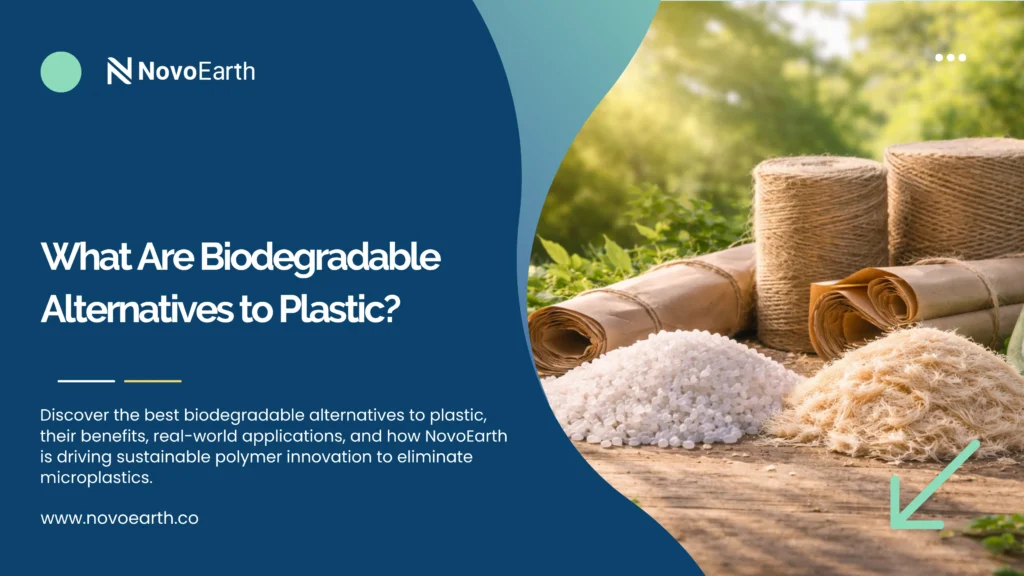
NovoEarth Novo Origins Our Material World Blogs Contact Us What Are Biodegradable Alternatives to Plastic? (Complete Guide 2026) If you’re a manufacturer, sustainability manager, startup founder, or policymaker, you’re likely under pressure to reduce plastic waste and adopt eco-friendly materials. Traditional plastics take 400–500 years to degrade, contributing to over 350 million tonnes of global plastic waste annually. Even worse, they break down into microplastics, which persist in ecosystems and industrial systems. So what’s the solution? Biodegradable alternatives to plastic are emerging as a scalable, practical way to replace conventional plastics—without compromising performance or durability. What Are Biodegradable Alternatives to Plastic? Biodegradable alternatives to plastic are materials designed to naturally break down into water, carbon dioxide, and biomass under controlled environmental conditions. Unlike traditional plastics, these materials: Decompose within 3–12 months (depending on conditions) Reduce microplastic pollution Can be engineered for industrial-grade applications Why We Need Biodegradable Alternatives to Plastic The Plastic Problem (With Data) Issue Data Global plastic waste 350+ million tonnes/year Recycling rate Only ~9% recycled globally Decomposition time 400–500 years Microplastic presence Found in 90% of industrial environments Key Problems: Persistent environmental pollution Microplastic contamination Limited recycling infrastructure Increasing regulatory pressure Top Biodegradable Alternatives to Plastic 1. Polylactic Acid (PLA) Made from renewable sources like plant starch Industrial compostable Used in rigid applications and moulded components Limitations: Requires controlled composting conditions 2. Polyhydroxyalkanoates (PHA) Produced by microorganisms Fully biodegradable in soil and marine environments Breaks down faster than PLA Key Advantage: No toxic residue 3. Starch-Based Bioplastics Derived from natural starch Flexible and cost-effective Blended with other biodegradable polymers for strength 4. Cellulose-Based Materials Extracted from plant fibres Highly abundant and renewable Used in films, coatings, and industrial materials 5. PBS (Polybutylene Succinate) Petroleum + bio-based hybrid Strong and heat-resistant Suitable for durable applications Comparison Table: Biodegradable Alternatives to Plastic Material Degradation Time Strength Key Use PLA 6–12 months Medium Rigid products PHA 3–6 months High Industrial components Starch blends 3–6 months Low–Medium Flexible materials Cellulose 2–5 months Medium Films & coatings PBS 6–12 months High Durable applications Benefits of Biodegradable Alternatives to Plastic Environmental Benefits Reduce landfill waste by up to 60% Lower carbon emissions by 30–70% Eliminate microplastic formation Industrial Benefits Compatible with existing manufacturing systems Customizable material properties Supports ESG and compliance goals Challenges of Biodegradable Alternatives to Plastic Let’s be realistic—this transition isn’t perfect yet. Key Challenges: Higher initial cost (10–15% more than conventional plastic) Limited composting infrastructure Performance limitations in extreme conditions If someone tells you biodegradable materials are a “perfect replacement”—they’re oversimplifying. The real advantage lies in continuous material innovation and system-level integration. How NovoEarth Is Solving This Problem NovoEarth is not just another materials company—it’s working at the intersection of circular economy + advanced polymer science. What NovoEarth Does: Develops advanced biodegradable polymer formulations Focuses on eliminating microplastics Design materials for real-world industrial scalability Key Differentiator: Instead of just replacing plastic, NovoEarth is redesigning how materials behave after use. Future of Biodegradable Alternatives to Plastic The biodegradable polymers market is expected to grow at a 15–20% CAGR, reaching over $25 billion by 2030. Emerging Trends: Marine-degradable polymers High-performance biodegradable composites Circular material ecosystems Policy-driven adoption When Should You Switch to Biodegradable Alternatives to Plastic? You should seriously consider switching if: You deal with high plastic waste streams Your business faces regulatory pressure You want to improve the brand sustainability perception You are targeting export markets with strict plastic norms FAQs – Biodegradable Alternatives to Plastic Q1: Are biodegradable plastics completely eco-friendly? Not always. Their impact depends on disposal conditions and material type. Q2: Do biodegradable alternatives to plastic degrade naturally everywhere? No. Some require industrial composting facilities. Q3: Are biodegradable materials stronger than plastic? Some (like PHA and PBS) can match or exceed conventional plastic performance. Q4: Do they eliminate microplastics? Yes, properly designed biodegradable polymers break down without forming persistent microplastics. Conclusion Biodegradable alternatives to plastic are no longer optional—they’re becoming essential. But the shift isn’t just about replacing materials. It’s about rethinking the lifecycle of products. Companies that adopt early will gain: Regulatory advantage Brand trust Long-term cost efficiency If you’re looking to transition to biodegradable alternatives to plastic, NovoEarth can help you: Identify the right materials Customize polymer solutions Build sustainable product systems 👉 Visit NovoEarth.co to explore sustainable polymer solutions today Author Section Sarthak GuptaMechanical Engineer | Founder, NovoEarth Sarthak Gupta is a Mechanical Engineer and the founder of NovoEarth, a cleantech venture specialising in circular material innovation and sustainable polymer solutions. His expertise lies in biodegradable polymer technologies and recycling systems for multilayer plastics—complex waste streams traditionally considered non-recyclable. With prior Research and Development experience in renewable energy and wind turbine design, Sarthak focuses on translating engineering innovation into scalable, commercially viable climate solutions. Scroll To Top 2025 © NovoEarth. All right Reserved. Facebook Linkedin Instagram
What is the Meaning of eco-friendly packaging?
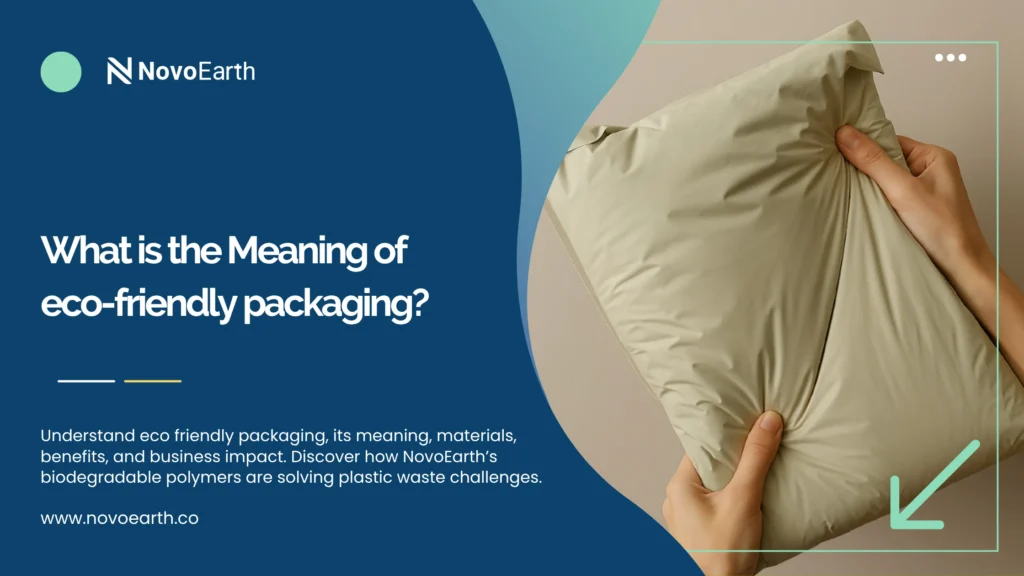
NovoEarth Novo Origins Our Material World Blogs Contact Us What is the Meaning of eco-friendly packaging? If you’re a manufacturer, brand owner, or sustainability-focused business, you’re probably under pressure to reduce environmental impact without compromising performance or cost. The problem is simple:Most conventional packaging materials don’t degrade, create microplastics, and fail to meet evolving ESG and EPR regulations. That’s where eco-friendly packaging comes in. In this blog, you’ll learn what eco-friendly packaging really means, how it works, and how businesses can adopt it without falling for greenwashing. What is Eco-Friendly Packaging? Eco-friendly packaging refers to packaging materials and systems designed to: Reduce environmental impact Use biodegradable, recyclable, or renewable resources Minimize carbon emissions across the lifecycle Prevent long-term pollution like microplastics In simple terms, eco-friendly packaging is packaging that doesn’t become a permanent environmental problem. Why Eco-Friendly Packaging Matters Today Let’s cut through the noise—this is not just about sustainability branding. Key Data Points: Over 400 million tonnes of plastic waste are produced annually Packaging contributes to ~40% of global plastic demand Only 9% of plastic waste is recycled globally Microplastics are now found in the air, water, and industrial environments If your business is not adopting eco-friendly packaging, you’re not just outdated—you’re exposed to regulatory and reputational risk. Types of Eco-Friendly Packaging Materials Material Type Sustainability Level Key Advantage Practical Limitation Biodegradable Polymers High Break down without toxic residue Needs controlled conditions Recycled Plastics Medium Reduces virgin plastic demand Quality degradation over cycles Paper-based Materials Medium Widely recyclable High water & energy use Compostable Materials High Supports organic breakdown Infrastructure limitations Bio-based Polymers High Lower carbon footprint Cost sensitivity 👉 Reality check: Not all “eco” materials are equal. Many just shift the problem instead of solving it. Key Features of Eco-Friendly Packaging 1. Biodegradability Breaks down into natural elements within a defined timeframe. 2. Recyclability Can re-enter the production cycle efficiently. 3. Low Carbon Footprint Consumes less energy during production and disposal. 4. Reduced Microplastic Impact Designed to avoid fragmentation into persistent microplastics. Benefits of Eco-Friendly Packaging for Businesses Business Benefits: Builds brand trust (over 70% consumers prefer sustainable brands) Helps meet EPR and ESG compliance Reduces long-term environmental liability Improves investor perception Environmental Benefits: Reduces landfill waste Limits ocean pollution Helps control microplastic generation Challenges You Should Not Ignore Let’s be blunt—switching to eco-friendly packaging is not plug-and-play. Major Barriers: Higher upfront cost Lack of disposal infrastructure Misleading “green” claims in the market If you choose the wrong material, you may end up paying more without solving the actual problem. How NovoEarth is Solving the Real Problem Most companies talk about sustainability. Very few solve material science problems. NovoEarth’s Approach: Advanced biodegradable polymer technology Designed for multilayer plastic replacement Focused on eliminating microplastics Built for industrial scalability 👉 NovoEarth is not just offering eco-friendly packaging—it’s building a circular material future. How to Choose the Right Eco-Friendly Packaging Practical Checklist Is it truly biodegradable, or is it just marketed as “green”? Does it reduce microplastic generation? Is it compatible with your production system? Does it meet compliance standards? Hard Truth: If your packaging still ends up in landfills for decades, it’s not eco-friendly packaging—no matter what the label says. FAQs on Eco-Friendly Packaging 1. Best eco-friendly packaging suppliers in India Leading players include innovators such as NovoEarth, which focuses on biodegradable polymer solutions and circular materials rather than recycled alternatives. 2. Affordable biodegradable packaging options for small businesses Options include: Biodegradable polymer films Lightweight material optimization Hybrid recyclable systems Costs are decreasing as technology scales. 3. Which packaging material is most eco-friendly? Biodegradable polymers are among the most effective because they: Break down naturally Reduce microplastics Support circular systems 4. Is eco-friendly packaging scalable for industrial use? Yes, but only with advanced material engineering. Basic alternatives often fail at scale. 5. Does eco-friendly packaging completely eliminate plastic waste? Not entirely—but it significantly reduces long-term environmental impact when implemented correctly. 6. Where can I find manufacturers of compostable packaging film in India? You can find manufacturers through B2B platforms, industry directories, and sustainability expos. Companies like NovoEarth are developing advanced compostable polymer solutions for industrial use. 7. What are the best compostable polymer materials available for packaging in India? Common materials include: PLA PBAT PHA Starch-based blends PLA + PBAT blends are widely used due to balanced performance and compostability. 8. Which companies supply compostable polymer bags with eco-friendly certifications in India? Look for suppliers with certifications like CPCB, EN 13432, and ISO 17088. Ensure the material is certified compostable, not just biodegradable. 9. Who are the top manufacturers of compostable polymer materials in India? India has several emerging players focusing on biodegradable polymers and circular materials. NovoEarth is one of the innovators working on scalable solutions. 10. Are compostable packaging materials suitable for industrial use? Yes, if properly engineered. High-quality compostable polymers can match traditional plastic performance. 11. How can businesses verify if packaging is truly compostable? Check for certifications and decomposition standards. Avoid vague “eco-friendly” claims. Conclusion Eco-friendly packaging is no longer optional—it’s a strategic necessity. Businesses that move early will gain: Competitive advantage Regulatory readiness Consumer trust Those who delay will face rising costs and shrinking market relevance. Build Future-Ready Packaging with NovoEarth Ready to move beyond outdated materials? 👉 Partner with NovoEarth to adopt eco-friendly packaging powered by biodegradable polymers and take a real step toward eliminating microplastics. Visit NovoEarth.co and start your transition today. Author Section Sarthak GuptaMechanical Engineer | Founder, NovoEarth Sarthak Gupta is a Mechanical Engineer and the founder of NovoEarth, a cleantech venture specialising in circular material innovation and sustainable polymer solutions. His expertise lies in biodegradable polymer technologies and recycling systems for multilayer plastics—complex waste streams traditionally considered non-recyclable. With prior Research and Development experience in renewable energy and wind turbine design, Sarthak focuses on translating engineering innovation into scalable, commercially viable climate solutions. Scroll To Top 2025 © NovoEarth. All right Reserved. Facebook Linkedin Instagram
How to Switch to Sustainable Packaging for an E-commerce Store?
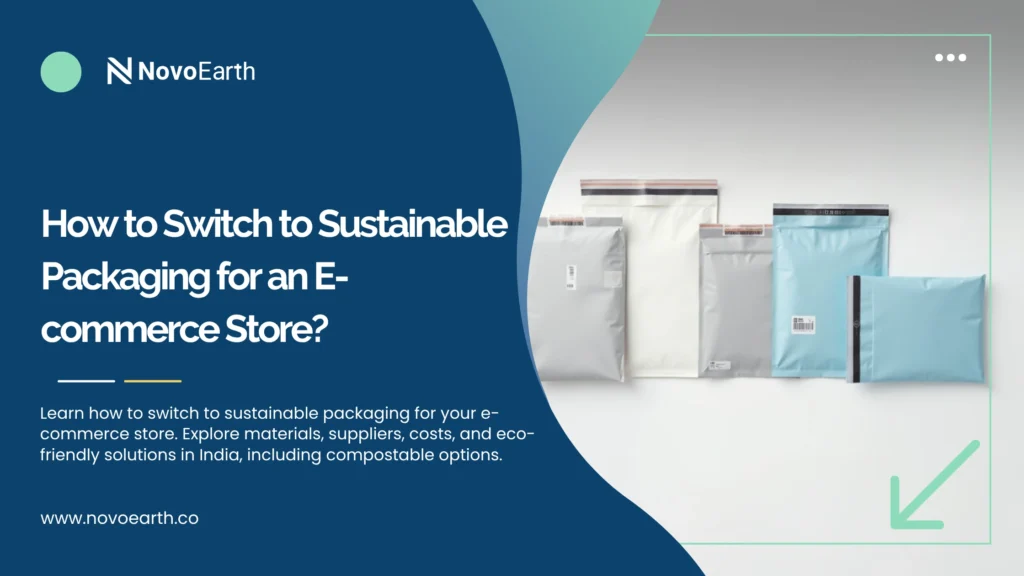
NovoEarth Novo Origins Our Material World Blogs Contact Us How to Switch to Sustainable Packaging for an E-commerce Store? If you are an e-commerce brand owner, D2C founder, operations manager, or packaging decision-maker, this guide is for you. E-commerce packaging generates massive plastic waste—from mailer bags to protective films. With rising consumer awareness and regulations in India, brands are under pressure to shift to sustainable packaging. But most businesses struggle with where to start, what materials to use, and how to balance cost with sustainability. This blog provides a step-by-step guide on how to switch to sustainable packaging for an e-commerce store, including materials, suppliers, costs, and scalable solutions using biodegradable and compostable polymers. What Is Sustainable Packaging for E-commerce? Sustainable packaging refers to materials that: Reduce environmental impact Are recyclable, biodegradable, or compostable Use minimal resources Support circular economy systems For e-commerce, this includes: Mailer bags Protective films Void fillers Product packaging Companies like NovoEarth are developing biodegradable and compostable polymer solutions specifically designed for packaging applications, helping e-commerce brands reduce plastic waste and microplastic pollution. Why E-commerce Brands Are Switching to Sustainable Packaging Key Drivers: 🌍 Consumer preference for eco-friendly brands 📦 Rapid growth of e-commerce waste 🏛 Government plastic regulations in India 📊 ESG and brand reputation impact Data Insight: Over 70% of consumers prefer sustainable packaging Packaging contributes to nearly 40% of plastic waste globally Switching to sustainable packaging is no longer optional—it’s a competitive advantage. Step-by-Step Guide to Switching to Sustainable Packaging Step 1: Audit Your Current Packaging Identify: Types of plastic used Volume of packaging Waste generation points This helps you understand where biodegradable or compostable alternatives can be introduced. Step 2: Choose the Right Sustainable Materials Common Options: Compostable mailer bags Paper-based packaging Biodegradable films Starch-based fillers NovoEarth is working on biodegradable polymer materials suitable for packaging films and mailers, designed for industrial scalability and reduced microplastic impact. Step 3: Test Performance & Compatibility Ensure materials meet: Strength requirements Moisture resistance Shipping durability Modern biodegradable polymers can match traditional plastics in performance when properly engineered. Step 4: Work with the Right Suppliers Choosing the right supplier is critical for: Quality consistency Customization Cost optimization Scalability Emerging material innovators like NovoEarth are focusing on developing compostable polymer solutions tailored for packaging applications in India. Step 5: Communicate Sustainability to Customers Use packaging as a branding tool: Print “Compostable” or “Eco-Friendly” labels Share sustainability stories Highlight reduced plastic impact This builds trust and improves brand loyalty. Best Sustainable Packaging Options for E-commerce Recommended Materials: Compostable mailer bags (PLA + PBAT blends) Recyclable paper packaging Biodegradable protective films Corrugated boxes with minimal plastic Cost Considerations Switching to sustainable packaging may involve: 10–25% higher initial cost Lower long-term waste management cost Higher brand value and customer retention As demand increases, the costs of biodegradable polymers are gradually decreasing. Challenges to Expect Supplier availability Performance testing Consumer education Infrastructure for composting However, these challenges are rapidly being addressed with innovation and scale. Frequently Asked Questions (FAQ) Where can I find compostable mailer bags for small businesses? Small businesses can source compostable mailer bags from sustainable packaging suppliers and emerging material companies. NovoEarth is working on developing compostable polymer solutions for packaging applications, which can be used to create durable and eco-friendly mailer bags suitable for e-commerce businesses. Companies providing custom compostable bags for retail use Several companies in India offer custom compostable bags for retail and e-commerce. Innovators like NovoEarth are focusing on material-level solutions—developing biodegradable polymers that can be customised into packaging products such as mailer bags and retail packaging. Companies offering custom eco-friendly packaging solutions in India India has a growing ecosystem of eco-friendly packaging providers. Companies like NovoEarth are contributing by developing scalable biodegradable and compostable polymer materials that can be used in customised packaging solutions across industries. Is sustainable packaging durable enough for shipping? Yes. Modern biodegradable polymers are engineered to provide strength, flexibility, and durability comparable to conventional plastics. Does sustainable packaging increase costs significantly? Initial costs may be slightly higher, but long-term benefits include brand value, compliance, and reduced environmental impact. How can e-commerce brands reduce microplastic pollution? By switching to biodegradable and compostable packaging materials that break down without leaving persistent microplastics. Sustainable packaging is not just an environmental choice—it’s a business strategy. If you’re ready to switch your e-commerce store to eco-friendly packaging, NovoEarth offers biodegradable polymer solutions designed for real-world packaging performance and reduced microplastic impact. 👉 Connect with NovoEarth to explore sustainable packaging solutions👉 Build a future-ready, eco-conscious e-commerce brand About the Author Sarthak GuptaMechanical Engineer | Founder, NovoEarth Sarthak Gupta is a Mechanical Engineer and the founder of NovoEarth, a cleantech venture specialising in circular material innovation and sustainable polymer solutions. His expertise lies in biodegradable polymer technologies and recycling systems for multilayer plastics—complex waste streams traditionally considered non-recyclable. With prior research and development experience in renewable energy and wind turbine design, Sarthak focuses on translating engineering innovation into scalable, commercially viable climate solutions. Scroll To Top 2025 © NovoEarth. All right Reserved. Facebook Linkedin Instagram
Best Compostable Polymer Materials Available for Packaging in India
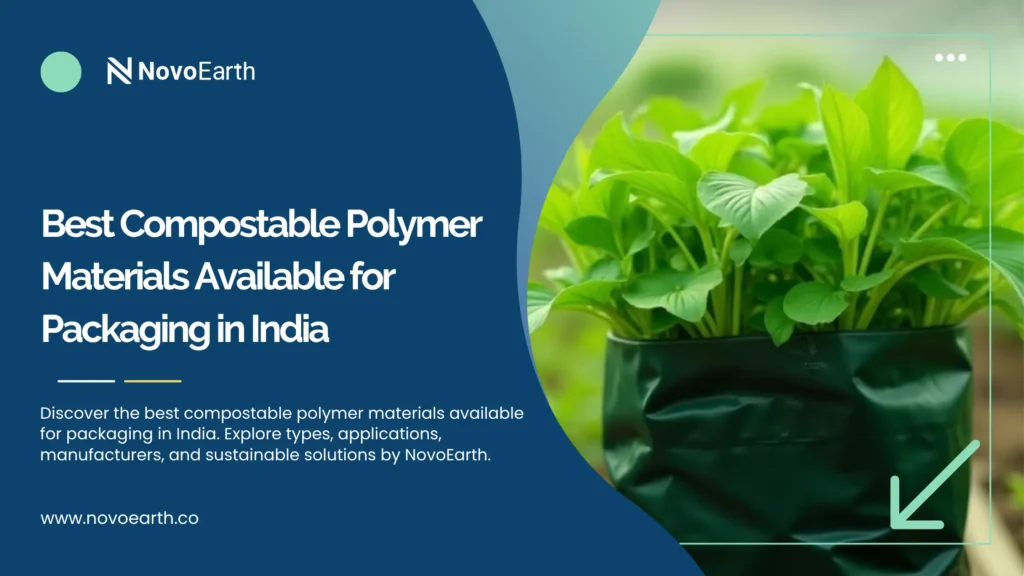
NovoEarth Novo Origins Our Material World Blogs Contact Us Best Compostable Polymer Materials Available for Packaging in India If you are a packaging manufacturer, procurement manager, sustainability officer, or startup in India, this guide is designed for you. With India implementing strict single-use plastic bans and increasing ESG expectations, businesses are actively searching for compostable polymer materials for packaging. However, the challenge lies in identifying materials that are not only compliant but also practical for real-world industrial use. This blog explores the best compostable polymer materials available for packaging in India, their applications, performance characteristics, and where businesses can source them—along with insights into emerging innovators like NovoEarth. What Are Compostable Polymer Materials? Compostable polymer materials are a category of biodegradable polymers that break down into natural elements like water, carbon dioxide, and biomass under composting conditions, leaving no toxic residue. Key Characteristics: Decompose within 90–180 days in industrial composting Leave no harmful microplastics Suitable for food-contact applications Compliant with compostability standards Companies like NovoEarth are developing compostable polymer materials that not only meet environmental standards but also address industrial performance and microplastic reduction challenges. Best Compostable Polymer Materials Available for Packaging in India Let’s explore the most widely used compostable polymer materials in India. 1. PLA (Polylactic Acid) Overview: PLA is one of the most commonly used compostable polymer materials for packaging. Applications: Food containers Cups & lids Transparent packaging films Benefits: Derived from renewable resources like corn starch Good clarity and rigidity Industrial compostability 2. PBAT (Polybutylene Adipate Terephthalate) Overview: PBAT is a flexible compostable polymer widely used in film applications. Applications: Compostable carry bags Stretch films Flexible packaging Benefits: High flexibility similar to LDPE Excellent processability Often blended with PLA or starch 3. Starch-Based Compostable Polymers Overview: Blends of natural starch with biodegradable polymers. Applications: Packaging films Disposable cutlery Agricultural films Benefits: Cost-effective Renewable feedstock Widely used in India 4. PHA (Polyhydroxyalkanoates) Overview: Advanced compostable polymers produced by microbial fermentation. Applications: Food packaging Medical materials High-end sustainable packaging Benefits: Fully biodegradable Suitable for marine environments Premium sustainable material Choosing the Right Compostable Polymer Material Selecting the right compostable polymer depends on: Key Factors: Type of packaging (rigid vs flexible) Load-bearing requirements Shelf life of the product Processing machinery compatibility Composting infrastructure availability NovoEarth focuses on developing compostable polymer materials tailored for industrial applications, ensuring compatibility with existing systems while reducing long-term environmental impact. Applications of Compostable Polymer Materials in India Major Use Cases: Garbage Bags and Industrial Waste Bags Industrial packaging films Agricultural mulch films In agriculture, compostable mulch films are replacing conventional plastic films that leave microplastic residues in soil. NovoEarth is working on biodegradable and compostable polymer solutions for mulch film applications, helping reduce soil contamination. Market Outlook in India The demand for compostable polymer materials in India is rapidly increasing due to: Government plastic bans Rising consumer awareness E-commerce and last-mile e-delivery growth Market Insights: India is one of the fastest-growing markets for biodegradable and compostable polymers Packaging accounts for over 50% of demand CAGR expected at 15%+ This growth is creating opportunities for innovative material companies like NovoEarth to deliver scalable, high-performance compostable polymer solutions. Comparison of Compostable Polymer Materials Material Flexibility Cost Compostability Common Use PLA Low Medium Industrial Rigid packaging PBAT High Medium Industrial Flexible films Starch Blends Medium Low Industrial Bags & films PHA Medium High Industrial + Marine Premium packaging Frequently Asked Questions (FAQ) Top manufacturers of compostable polymer materials in India India has a growing ecosystem of manufacturers producing compostable polymer materials for packaging. Among emerging innovators, NovoEarth is focused on developing advanced biodegradable and compostable polymer solutions designed for industrial applications, including multilayer plastic alternatives and packaging films. Where to buy compostable polymer films for food packaging in India Compostable polymer films can be sourced from specialised manufacturers and sustainable material providers. Companies like NovoEarth are working on developing scalable, compostable polymer solutions suitable for food packaging, ensuring performance, compliance, and reduced microplastic impact. Are compostable polymer materials safe for food packaging? Yes, many compostable polymer materials like PLA and PHA are approved for food-contact applications. Do compostable polymers completely eliminate plastic pollution? They significantly reduce long-term pollution and microplastics, especially when disposed of properly under composting conditions. Sustainable packaging is becoming a business necessity in India. If your brand is looking to adopt compostable polymer materials for packaging, NovoEarth offers innovative solutions designed for industrial scalability and environmental impact. 👉 Connect with NovoEarth to explore compostable polymer solutions for your packaging needs👉 Build packaging systems that reduce waste and microplastic pollution About the Author Sarthak GuptaMechanical Engineer | Founder, NovoEarth Sarthak Gupta is a Mechanical Engineer and the founder of NovoEarth, a cleantech venture specialising in circular material innovation and sustainable polymer solutions. His expertise lies in biodegradable polymer technologies and recycling systems for multilayer plastics—complex waste streams traditionally considered non-recyclable. With prior Research and Development experience in renewable energy and wind turbine design, Sarthak focuses on translating engineering innovation into scalable, commercially viable climate solutions Scroll To Top 2025 © NovoEarth. All right Reserved. Facebook Linkedin Instagram
What Polymers Are Compostable? Examples of Compostable Polymer Materials
NovoEarth Novo Origins Our Material World Blogs Contact Us What Polymers Are Compostable? If you are a packaging manufacturer, sustainability professional, product designer, or materials engineer, you have probably heard the term compostable polymer materials becoming increasingly important in the shift toward sustainable materials. One major challenge industries face today is that traditional plastics can remain in the environment for hundreds of years, often fragmenting into microplastics that persist in soil and water systems. This growing environmental concern has led to the development of compostable polymer materials, which are designed to break down naturally under composting conditions without leaving harmful residues. In this article, we will explore: What compostable polymer materials are Which polymers are compostable Examples of compostable materials used in industry How these materials contribute to reducing microplastic pollution What Are Compostable Polymer Materials? Compostable polymer materials are polymers engineered to biologically degrade in controlled composting environments, typically within 90–180 days. Unlike conventional plastics that break down into microplastic fragments, compostable polymers fully convert into natural elements such as carbon dioxide, water, and biomass. Key Characteristics of Compostable Polymer Materials Decompose through microbial activity Leave minimum to no toxic residues Reduce the risk of microplastic formation Compatible with industrial composting systems Globally, more than 400 million tons of plastic are produced annually, and a significant portion ends up in landfills or the environment. Compostable polymer materials offer an alternative pathway for managing certain types of plastic waste. How Compostable Polymers Break Down Compostable polymer materials degrade through biological processes driven by microorganisms. Decomposition Process Microorganisms attach to the polymer surface Enzymes break down long polymer chains Polymers convert into smaller organic molecules These molecules transform into CO₂, water, and biomass Under industrial composting conditions, typically 50–60°C, many compostable polymer materials can degrade within 12–16 weeks. Types of Compostable Polymer Materials Several polymers are widely used to produce compostable materials. Polymer Full Name Source Applications PLA Polylactic Acid Corn starch/sugarcane Industrial packaging films PHA Polyhydroxyalkanoates Microbial fermentation Medical and speciality materials PBS Polybutylene Succinate Bio-based or petroleum Agricultural films PBAT Polybutylene Adipate Terephthalate Synthetic biodegradable Flexible packaging films Starch Blends Plant starch with polymers Renewable biomass Compostable carry bags These compostable polymer materials are increasingly used in industrial packaging, agriculture, and logistics applications. Examples of Compostable Materials Several industries are adopting compostable polymer materials to reduce plastic waste. Common Examples of Compostable Materials Compostable carry bags Biodegradable waste collection bags Agricultural mulch films Industrial packaging films E-commerce mailer bags Industries Using Compostable Polymer Materials E-commerce and logistics packaging Agriculture and farming Waste management systems Industrial packaging According to market projections, the global bioplastics production capacity is expected to exceed 7 million tons by 2028, showing the increasing demand for compostable polymer materials. Compostable vs Biodegradable Polymers Many people assume that biodegradable plastics and compostable polymers are the same, but there are key differences. Feature Compostable Polymers Biodegradable Polymers Decomposition Time 90–180 days Variable Composting Requirement Yes Not always Microplastic Risk Minimal Possible Certification Usually required Not always In simple terms, all compostable polymers are biodegradable, but not all biodegradable polymers qualify as compostable polymer materials. Aspect Biodegradable Polymers Compostable Polymers Scientific Definition The capacity of a material to be broken down by microorganisms into CO2, water, and biomass. A subset of biodegradable materials that break down under specific conditions into nutrient-rich humus. Standard Timeframe No fixed timeframe. Could take 6 months or 100 years. Strictly defined. Usually 90–180 days depending on the facility type (Industrial vs. Home). Primary Mechanism Enzymatic/Microbial action in any natural environment (Soil, Water, Landfill). Thermophilic microbial activity + Heat-induced hydrolysis. End Products CO2 (or CH4 in anaerobic settings), H2O, and Biomass. CO2, H2O, and Compost (Organic Fertiliser). Microplastic Risk High risk if the environment doesn’t meet the polymer’s specific needs (e.g., PLA in the ocean). Low standards require 90% disintegration to particles <2mm within the test period. Toxicity Testing Not always required by the general term. Mandatory. Must pass eco-toxicity tests (e.g., cress seed germination) to ensure soil health. Key Standards OECD 301, ISO 17556 (Soil), ASTM D6691 (Marine). EN 13432, ASTM D6400, ISO 17088, IS/ISO 17088. How NovoEarth Is Advancing Compostable Polymer Materials At NovoEarth, the focus is on developing next-generation biodegradable and compostable polymer materials that minimise environmental impact and reduce microplastic formation. NovoEarth’s innovation efforts focus on: Enhancing complete polymer mineralisation Designing materials that avoid microplastic fragmentation Supporting circular material systems By combining polymer science, engineering innovation, and sustainability principles, NovoEarth is working toward scalable material solutions that help industries transition away from traditional plastics. Benefits of Compostable Polymer Materials Environmental Benefits Reduce plastic pollution Lower microplastic contamination Support organic waste management systems Reduce pressure on landfills Industrial Benefits Align with sustainability regulations Improve corporate ESG goals Enable circular material systems Key Environmental Insights Plastic pollution affects more than 700 marine species worldwide Compostable polymer materials can help reduce single-use plastic waste in several sectors Challenges of Compostable Polymer Materials Despite their benefits, compostable polymer materials also face several challenges: Limited industrial composting infrastructure Higher production costs compared to conventional plastics Lack of consumer awareness about proper disposal However, advancements in polymer technology and global sustainability policies are helping address these barriers. Future of Compostable Polymer Materials The future of compostable polymer materials is closely linked to the transition toward circular economies and sustainable material systems. Industry forecasts indicate that bioplastic production could triple by 2030, driven by: Plastic waste regulations Corporate sustainability commitments Rising demand for eco-friendly materials As industries move toward responsibly degradable materials, compostable polymers will play a crucial role in reducing long-term environmental pollution. Frequently Asked Questions (FAQs) What polymers are compostable? Common compostable polymers include PLA, PHA, PBS, PBAT, and starch-based polymer blends. How long do compostable polymer materials take to degrade? Most compostable polymer materials break down within 90–180 days under industrial composting conditions. Do compostable polymers produce microplastics? Properly designed and certified compostable polymers break down completely into natural components, reducing the risk of microplastic formation. Where are compostable polymer materials
What Are the Different Types of Compostable Polymers Available?
NovoEarth Novo Origins Our Material World Blogs Contact Us What Are the Different Types of Compostable Polymers Available? Many industries today—from manufacturing to agriculture and consumer products—are searching for sustainable alternatives to conventional plastics. Engineers, sustainability professionals, and businesses are increasingly exploring Compostable Polymer Materials to reduce environmental impact while maintaining material performance. However, a common challenge is understanding the different types of compostable polymers available and how they differ from each other. Each polymer has unique properties, degradation conditions, and industrial applications, which makes selecting the right material complicated. The good news is that advancements in polymer science have created several types of compostable polymer materials. From PLA and PBAT to PHA and starch-based polymers, these materials provide practical solutions for reducing plastic waste and minimizing microplastic pollution. In this article, we will explore the different types of compostable polymer materials available, their properties, and their role in building a more sustainable material ecosystem. What Are Compostable Polymer Materials? Compostable Polymer Materials are plastics designed to break down into carbon dioxide, water, and biomass through microbial activity under composting conditions. Unlike conventional plastics that can remain in the environment for hundreds of years, compostable polymer materials can degrade significantly faster when processed in industrial composting systems. Key Characteristics of Compostable Polymer Materials Biodegrades through microbial activity Leave minimum to no toxic residue after degradation Meet global composting standards such as ISO17088, ASTM D6400 or EN 13432 Typically break down within 90–180 days in industrial composting facilities These characteristics make compostable polymer materials a key part of the circular materials economy. Why Compostable Polymers Are Important Plastic pollution continues to grow at an alarming rate. Global Plastic Production 400+ Million Tons per Year Plastic Waste Recycled Around 9% Plastic Waste Landfilled or Mismanaged Nearly 80% Because traditional plastics degrade extremely slowly, compostable polymer materials offer a pathway to reduce long-term environmental damage. At NovoEarth, the focus is on developing biodegradable polymer technologies that reduce microplastic formation and support circular material systems. Different Types of Compostable Polymers Available Several compostable polymer materials are currently used in industrial applications. Each material offers unique benefits depending on flexibility, strength, processing compatibility, and degradation behavior. 1. Polylactic Acid (PLA) Polylactic Acid (PLA) is one of the most widely produced compostable polymer materials in the global bioplastics market. It is produced from renewable resources such as corn starch or sugarcane and is commonly used in biodegradable product manufacturing. Key Properties of PLA Transparent and rigid material Good mechanical strength Suitable for injection molding and extrusion Derived from renewable feedstocks Common Industrial Applications Consumer goods 3D printing materials Fiber-based products Rigid biodegradable components PLA currently represents over 40% of global bioplastics production capacity, making it one of the most commercially important compostable polymer materials. 2. Polybutylene Adipate Terephthalate (PBAT) PBAT is a flexible, compostable polymer widely used in applications where durability and elasticity are required. Key Characteristics Flexible and tough material Excellent biodegradability Often blended with PLA or starch-based polymers Good film-forming properties Industrial Applications Flexible films Agricultural films Compostable packaging materials Polymer blends PBAT is particularly useful when flexibility is required, as PLA alone can sometimes be brittle. 3. Polyhydroxyalkanoates (PHA) Polyhydroxyalkanoates (PHA) are a family of bio-based, compostable polymer materials produced by microorganisms through fermentation processes. Because they originate from biological systems, PHA polymers are considered among the most promising next-generation sustainable polymers. Key Properties Biodegradable in soil and marine environments Produced using microbial fermentation Highly sustainable polymer source Applications Biomedical materials Agricultural materials Specialty biodegradable products Industrial polymer applications PHA is particularly attractive because it can biodegrade in more natural environments compared to many other compostable polymers. 4. Starch-Based Compostable Polymers Starch-based polymers are created by blending natural starch with biodegradable synthetic polymers to improve performance. Key Features Derived from plant-based raw materials Highly biodegradable Relatively cost-effective Applications Agricultural mulch films Industrial packaging materials Cushioning materials These polymers help reduce dependency on fossil-based plastics while improving sustainability. Comparison Table of Compostable Polymer Materials Polymer Type Source Key Strength Typical Applications PLA Renewable crops Rigid and transparent Consumer products PBAT Synthetic biodegradable polymer Flexible and durable Films and flexible materials PHA Microbial fermentation Marine biodegradable Specialty applications Starch-Based Polymers Plant starch Cost-effective Industrial packaging This diversity shows that different compostable polymer materials serve different industrial requirements. How NovoEarth Is Advancing Compostable Polymer Materials Developing sustainable materials requires both polymer innovation and circular waste management systems. NovoEarth focuses on: Advanced biodegradable polymer technologies Reducing microplastic generation Developing circular material solutions Supporting sustainable industrial manufacturing Through material science innovation, NovoEarth is working toward eliminating microplastics and accelerating the adoption of compostable polymer materials across industries. Benefits of Compostable Polymer Materials Environmental Benefits Reduce plastic pollution Minimize microplastic formation Support composting infrastructure Industrial Benefits Compatible with many existing processing technologies Increasing consumer demand for sustainable materials Alignment with environmental regulations Future of Compostable Polymer Materials The global bioplastics industry is growing rapidly. Industry forecasts suggest: Global production of bioplastics could exceed 7 million tons annually by 2030 Demand for compostable polymer materials is expanding across multiple industries Future innovations are expected in: Marine biodegradable polymers High-performance compostable materials Cost-efficient polymer production technologies Frequently Asked Questions (FAQ) What are compostable polymer materials? Compostable polymer materials are plastics that biodegrade into carbon dioxide, water, and biomass under composting conditions. Are compostable polymers biodegradable? Yes. Compostable polymers are a subset of biodegradable polymers that meet specific composting standards. How long do compostable polymers take to degrade? Most compostable polymers degrade within 90–180 days in industrial composting environments. What industries use compostable polymers? Industries using compostable polymer materials include: Manufacturing Agriculture Consumer goods Biomedical applications Are compostable polymers better than conventional plastics? They offer reduced environmental impact, especially when combined with proper waste management systems. Build the Future of Sustainable Materials with NovoEarth If your organization is exploring Compostable Polymer Materials or looking for sustainable alternatives to conventional plastics, NovoEarth is developing advanced biodegradable polymer technologies designed to reduce microplastic pollution.
How Do Biodegradable Polymers Break Down in Different Environments?
NovoEarth Novo Origins Our Material World Blogs Contact Us How Do Biodegradable Polymers Break Down in Different Environments? If you are a packaging manufacturer, sustainability professional, policymaker, or materials innovator, you have likely come across the growing conversation around biodegradable polymers. The challenge the world faces today is clear. Traditional plastics can remain in the environment for 400–500 years, often fragmenting into microplastics rather than fully decomposing. According to global environmental studies, more than 11 million tonnes of plastic waste enter oceans every year. This raises an important question: Do biodegradable polymers break down the same way in every environment? The answer is no. The degradation of biodegradable polymers depends heavily on environmental conditions such as temperature, microorganisms, moisture, and oxygen availability. In this blog, we will explain how biodegradable polymers degrade in different environments, the science behind the process, and how companies like NovoEarth are developing responsible biodegradable polymer solutions to help eliminate microplastic pollution. What Are Biodegradable Polymers? Biodegradable polymers are materials designed to break down naturally through microbial activity. Microorganisms such as bacteria and fungi digest these materials and convert them into natural components. Instead of persisting as microplastics, properly designed biodegradable polymers break down into: Carbon dioxide (CO₂) Water Biomass Some widely used biodegradable polymers include: PLA (Polylactic Acid) PHA (Polyhydroxyalkanoates) PBS (Polybutylene Succinate) Starch-based biodegradable polymers According to European Bioplastics, global production capacity of biodegradable polymers is expected to exceed 7 million tonnes by 2028, showing the rapid shift toward sustainable materials. The Science Behind Biodegradable Polymer Degradation The degradation of biodegradable polymers generally occurs in three key stages. Stage Process Result Fragmentation Polymer chains weaken Material begins breaking apart Microbial digestion Microorganisms consume fragments Enzymes break polymer bonds Mineralisation Final conversion Material becomes CO₂, water and biomass Factors That Affect Degradation The breakdown of biodegradable polymers depends on several environmental factors: Temperature Microbial population Oxygen availability Moisture Polymer structure Because these factors differ across ecosystems, biodegradable polymers behave differently in soil, compost, marine environments, and landfills. How Biodegradable Polymers Break Down in Different Environments Industrial Composting Industrial composting provides ideal conditions for many biodegradable polymers. Typical composting conditions include: Temperatures of 50–60°C High microbial activity Controlled moisture Adequate oxygen Under these conditions, many biodegradable polymers degrade within 90–180 days. Industrial composting is widely used for: Compostable packaging Food service items Organic waste bags Soil Environment When biodegradable polymers enter soil environments, the breakdown process depends on microbial diversity and soil moisture. Typical soil conditions: Temperature: 10–30°C Moderate microbial activity Variable moisture levels In soil environments, biodegradable polymers may take: 6 months to 2 years to fully degrade. This property makes biodegradable polymers useful in applications such as: Agricultural mulch films Plant pots Controlled-release fertiliser coatings Marine and Aquatic Environments Plastic pollution in oceans is one of the most pressing environmental challenges today. The United Nations Environment Programme estimates that over 11 million tonnes of plastic enter the ocean every year. In marine environments: Temperatures are lower Microbial activity differs Oxygen levels vary Because of these conditions, biodegradable polymers degrade much slower in marine environments. However, certain materials like PHA-based biodegradable polymers are capable of breaking down through marine microbial activity, helping reduce long-term plastic accumulation. Landfill Environment Landfills present a different challenge for biodegradable polymers. Typical landfill conditions include: Low oxygen Compacted waste layers Limited microbial diversity In these conditions, biodegradable polymers may degrade slowly over several years. However, decomposition can generate biogas such as methane and carbon dioxide, which some landfill facilities capture for energy recovery. Degradation Time Comparison Environment Typical Conditions Degradation Time Industrial Compost High heat and microbes 3–6 months Soil Moderate microbes 6 months – 2 years Marine Low temperature 1–5 years Landfill Low oxygen Several years Why Designing the Right Biodegradable Polymer Matters Not all biodegradable polymers behave the same way. Their chemical composition, additives, and structure determine how they break down. Material scientists aim to balance: Mechanical strength Processing compatibility Controlled biodegradation At NovoEarth, innovation in biodegradable polymers focuses on: Reducing microplastic formation Enhancing complete mineralisation Supporting circular material systems NovoEarth develops biodegradable polymers that are not just degradable but responsibly degradable, ensuring they break down safely in real-world conditions. Environmental Benefits of Biodegradable Polymers Switching to biodegradable polymers can provide several sustainability advantages. Environmental Benefits Reduces long-term plastic pollution Helps minimise microplastic formation Supports composting systems Enables circular material flows Industry Benefits Compliance with plastic regulations Sustainable packaging innovation Improved brand sustainability image According to the OECD, the world produces more than 353 million tonnes of plastic waste annually, highlighting the urgent need for better materials like biodegradable polymers. The Future of Biodegradable Polymers Research and innovation in biodegradable polymers are accelerating rapidly. Future developments include: Marine-degradable polymers Advanced compostable packaging Bio-based polymer materials Circular polymer systems Companies like NovoEarth are working toward next-generation biodegradable polymer technologies that combine performance with environmental responsibility. FAQs What are biodegradable polymers? Biodegradable polymers are materials that microorganisms can break down into natural substances like water, carbon dioxide, and biomass. Do biodegradable polymers degrade in the ocean? Some biodegradable polymers can degrade in marine environments, but the process is slower due to lower microbial activity. How long do biodegradable polymers take to decompose? Industrial composting may take 3–6 months, while soil or marine environments may take months to years. Do biodegradable polymers create microplastics? Properly engineered biodegradable polymers are designed to fully mineralise, reducing microplastic formation. Are biodegradable polymers better than conventional plastics? When designed and disposed of properly, biodegradable polymers can significantly reduce environmental plastic pollution. Looking for sustainable material innovation? NovoEarth is developing next-generation biodegradable polymers designed to reduce microplastic pollution and enable circular plastic systems. Explore our work in sustainable materials at👉 NovoEarth.co About the Author Sarthak Gupta Sarthak Gupta is a Mechanical Engineer and the founder of NovoEarth, a cleantech venture specialising in circular material innovation and sustainable polymer solutions. His expertise lies in biodegradable polymer technologies and recycling systems for multilayer plastics, complex waste streams traditionally considered non-recyclable. With prior research and
Are There Sustainable Alternatives to Traditional Plastic Films?
NovoEarth Novo Origins Our Material World Blogs Contact Us Are There Sustainable Alternatives to Traditional Plastic Films? If you are a manufacturer, sustainability professional, packaging engineer, or environmentally conscious business owner, you have likely asked one important question: Are there better alternatives to plastic films? Traditional plastic films made from petroleum-based polymers are used everywhere — from industrial packaging to consumer goods. However, these materials take hundreds of years to degrade and are one of the biggest contributors to microplastic pollution. This is where biodegradable polymers come into the picture. They offer a sustainable alternative that can break down naturally under specific conditions while maintaining functional performance similar to traditional plastics. In this article, we will explore how biodegradable polymers are transforming plastic films, the materials used, and why industries are rapidly shifting toward sustainable polymer solutions. Why Traditional Plastic Films Are a Problem Traditional plastic films are typically made from polymers like polyethylene (PE), polypropylene (PP), and PVC. While these materials are lightweight and durable, they create long-term environmental problems. Key Issues with Conventional Plastic Films Extremely slow degradation – Plastic films can take 200–500 years to break down. Microplastic formation – Instead of degrading completely, they fragment into microplastics. Low recycling rates – Globally, only 9% of plastic waste is recycled. Difficult to recycle multilayer films – Many flexible films contain mixed materials that cannot be processed easily. Because of these challenges, industries are now exploring biodegradable polymers as an alternative material for film applications. What Are Biodegradable Polymers? Biodegradable polymers are materials that can be decomposed by microorganisms such as bacteria and fungi into water, carbon dioxide, methane, and biomass. Unlike conventional plastics, biodegradable polymers are designed to return safely to nature after use. Key Characteristics Property Traditional Plastic Films Biodegradable Polymer Films Raw Material Petroleum based Renewable or bio-based sources Degradation Time 200–500 years Months to a few years Environmental Impact High microplastic pollution Minimal long-term residue End-of-life options Landfill / limited recycling Composting/biodegradation Because of these advantages, biodegradable polymers are increasingly used to create sustainable plastic film alternatives. Types of Sustainable Alternatives to Plastic Films Several biodegradable polymers are currently being developed and used as replacements for traditional plastic films. 1. PLA (Polylactic Acid) PLA is one of the most widely used biodegradable polymers derived from renewable resources, such as: Corn starch Sugarcane Cassava Advantages Transparent and lightweight Good film-forming ability Industrial compostability 2. PHA (Polyhydroxyalkanoates) PHA is a family of biodegradable polymers produced by microbial fermentation. Key benefits Fully biodegradable in soil and marine environments Excellent barrier properties Suitable for flexible films 3. Starch-Based Polymer Films Starch blends are another class of biodegradable polymers used for film production. ThermoPlastic starch is often blended with different types of biodegradable polymers to make these blends. These films are typically made from: Potato starch Corn starch Tapioca starch They degrade quickly under composting conditions. 4. Cellulose-Based Films Cellulose, derived from plant fibers, is also used to create sustainable films. Advantages include: High biodegradability Renewable raw material Good transparency and flexibility How Biodegradable Polymer Films Reduce Microplastic Pollution Traditional plastic films fragment into microplastics smaller than 5 mm, which contaminate soil, water, and even human food chains. Biodegradable polymers, on the other hand, break down into natural elements through microbial activity. Environmental Benefits Reduced long-term plastic accumulation Lower microplastic generation Better compatibility with circular economy models According to environmental studies, replacing conventional plastics with biodegradable polymers could reduce plastic waste leakage by up to 30–40% in certain applications. Role of NovoEarth in Sustainable Polymer Innovation At NovoEarth, the focus is on developing advanced biodegradable polymers designed to address some of the most complex plastic waste challenges. NovoEarth works on: Circular material innovation Biodegradable polymer development Solutions aimed at eliminating microplastic pollution By combining material science, engineering, and sustainability, NovoEarth is helping industries transition toward responsible polymer use. Industries Adopting Biodegradable Polymer Films Many sectors are adopting biodegradable polymers to replace conventional plastic films. Key industries include: Agriculture Consumer goods E-commerce packaging Industrial protective films Medical applications Example Applications Industry Application Agriculture Mulch films Consumer goods Protective wraps Industrial Temporary surface protection films Healthcare Disposable medical films As regulations tighten globally, the demand for biodegradable polymers continues to rise. Challenges of Biodegradable Polymer Films Despite their advantages, biodegradable polymers still face some limitations. Common challenges Higher production cost compared to traditional plastics Limited composting infrastructure in some regions Performance differences depending on application However, ongoing innovation is rapidly improving the performance and scalability of biodegradable polymers. Future of Sustainable Plastic Film Alternatives The global push for sustainability is accelerating innovation in biodegradable polymers. Industry forecasts suggest the biodegradable plastics market could exceed $20 billion by 2030. Advancements in polymer science, waste management systems, and circular material design will make biodegradable polymers an essential part of the future plastics economy. Frequently Asked Questions 1. What are biodegradable polymers? Biodegradable polymers are materials that decompose naturally through microbial activity into water, carbon dioxide, and biomass. 2. Are biodegradable polymer films as strong as plastic films? Modern biodegradable polymers can achieve similar mechanical properties depending on the formulation and application. 3. Do biodegradable plastics degrade everywhere? Not always. Some biodegradable polymers require industrial composting conditions to break down efficiently. 4. Are biodegradable polymers environmentally safe? Yes. When properly designed and disposed of, biodegradable polymers significantly reduce long-term plastic pollution. 5. Can biodegradable polymers replace all plastic films? They can replace many applications, but certain high-performance uses may still require further material innovation. Plastic pollution is one of the biggest environmental challenges of our time. Transitioning to biodegradable polymers is a practical step toward reducing long-term plastic waste and microplastic contamination. At NovoEarth, we are committed to developing advanced biodegradable polymer solutions and circular material technologies that help industries move toward sustainable materials. 👉 Learn more about our innovations at: NovoEarth Author Sarthak Gupta Sarthak Gupta is a Mechanical Engineer and the founder of NovoEarth, a cleantech venture specialising in circular
How Does a Biodegradable Polymer’s Chemistry Work?
NovoEarth Novo Origins Our Material World Blogs Contact Us How Does a Biodegradable Polymer’s Chemistry Work? Are you a manufacturer, sustainability manager, brand owner, or policymaker looking to understand how Biodegradable Polymers actually work? Many businesses want to switch to sustainable materials but struggle with one question: how do biodegradable polymers really break down? Are they marketing buzzwords, or is there real science behind them? In this blog, we’ll break down the chemistry of Biodegradable Polymers in simple words. You’ll understand how they degrade at a molecular level, what conditions they require, and why they are critical in eliminating microplastic pollution. What Are Biodegradable Polymers? Biodegradable Polymers are materials designed to break down into natural substances, such as carbon dioxide, water, and biomass, through the action of microorganisms, including bacteria and fungi. Unlike conventional plastics that take 400–500 years to degrade, biodegradable polymers convert into biomass within a specified timeframe. Most industrially compostable biodegradable polymers decompose within 90–180 days under controlled composting conditions. While others may take several years, depending on the bioactivity and ambient conditions of the region. Common Examples: Polylactic Acid (PLA) Polyhydroxyalkanoates (PHA) Starch-based polymers PBS (Polybutylene Succinate) The secret lies in their chemical backbone structure. The Chemistry Behind Biodegradable Polymers The degradation of Biodegradable Polymers depends on their molecular structure. 1. Polymer Backbone Structure Traditional plastics like polyethene have carbon–carbon (C–C) bonds, which are extremely stable and resistant to natural breakdown. In contrast, Biodegradable Polymers contain: Ester bonds (–COO–) Amide bonds Ether linkages These bonds are chemically weaker and susceptible to environmental attack. 2. Hydrolysis – The First Step Hydrolysis is the primary mechanism in many biodegradable polymers. What happens? Water molecules enter the polymer matrix. They break ester bonds. Long polymer chains split into smaller fragments. Simplified Reaction: Polymer chain + Water → Shorter chains → Oligomers → Monomers For example:PLA → Lactic Acid → CO₂ + H₂O (via microbes) Hydrolysis rates increase at: Temperatures above 50°C High humidity Composting environments 3. Microbial Enzymatic Breakdown After hydrolysis reduces the molecular weight, microorganisms begin digestion. Microbes secrete enzymes such as: Esterases Lipases Proteases These enzymes: Recognize polymer fragments Convert them into metabolic intermediates Transform them into CO₂, water, and biomass This is where Biodegradable Polymers differ fundamentally from Oxo-degradable plastics, which fragment but do not fully mineralise. Factors That Control Degradation Speed Not all Biodegradable Polymers degrade at the same rate. Chemistry and the environment both matter. Factor Impact on Degradation Temperature Higher temp = Faster hydrolysis Moisture Required for bond cleavage Oxygen Needed for aerobic composting Polymer Crystallinity More crystalline = Slower degradation Thickness Thicker materials degrade more slowly For example: Thin compostable films may degrade in 90 days Thick moulded parts may take 6–12 months Industrial Composting vs Natural Environment A common misconception is that Biodegradable Polymers break down instantly in any environment. In reality, their degradation speed depends heavily on surrounding conditions such as temperature, moisture, and microbial activity. Industrial Composting Industrial composting facilities provide ideal conditions for Biodegradable Polymers to degrade efficiently. These systems maintain: 55–60°C temperature Controlled moisture levels Active microbial populations Under these optimised conditions, most certified biodegradable polymers can break down within 90–180 days. Soil or Marine Environment In natural environments like soil or marine ecosystems, the conditions are less controlled. Lower temperatures and slower microbial activity can significantly extend the degradation time of biodegradable materials. This is why proper waste management systems and composting infrastructure are essential for ensuring the effective breakdown of biodegradable polymers. However, innovation in material science is rapidly evolving. NovoEarth has developed a material designed to degrade even in natural environments, and the company will be launching this advanced biodegradable polymer solution soon, further helping address the challenge of plastic persistence beyond industrial composting systems. How Biodegradable Polymers Help Eliminate Microplastics Conventional plastics fragment into microplastics (<5mm) and persist for decades. True Biodegradable Polymers: Undergo chain scission Fully mineralize Leave no toxic residues At NovoEarth, our biodegradable polymer innovations focus on addressing critical environmental challenges such as microplastic pollution and improving material circularity. Our team is actively developing advanced biodegradable polymer formulations aimed at reducing microplastic formation, enhancing complete mineralisation, and supporting circular material systems. Early lab-scale studies have shown encouraging results, indicating the potential for our materials to perform effectively even beyond controlled composting environments. Building on this research, we are continuously advancing our technology to develop next-generation materials designed to degrade responsibly while supporting real-world sustainability goals. Chemical Comparison – Traditional vs Biodegradable Polymers Property Conventional Plastic Biodegradable Polymers Backbone Carbon–Carbon Ester/Amide Bonds Degradation Time 400+ years 3–12 months Microplastic Risk High Minimal (if properly composted) Enzymatic Breakdown No Yes This chemical distinction defines sustainability. Why Chemistry Matters for Sustainable Innovation Understanding the chemistry of Biodegradable Polymers helps businesses: Design eco-friendly products Meet regulatory standards Avoid greenwashing risks Improve ESG compliance Reduce long-term environmental liability At NovoEarth, we combine polymer chemistry with engineering to create scalable biodegradable polymers for real-world applications. Frequently Asked Questions (FAQ) 1. Do biodegradable polymers degrade in landfills? Most landfills lack oxygen and proper microbial activity. Therefore, biodegradable polymers degrade much more slowly than in industrial composting environments. 2. Are biodegradable polymers safe for soil? Certified biodegradable polymers mineralise into natural components without leaving toxic residues when properly processed. 3. Do biodegradable polymers form microplastics? True biodegradable polymers are designed to fully mineralise, unlike conventional plastics that fragment into microplastics. 4. How long do biodegradable polymers take to decompose? Industrially compostable biopolymers, in an industrial composting facility – 90% of the material converts into biomass within 120 days, while for a truly biodegradable polymer, the standard has been defined to be 90% within 2 years under aerobic conditions. Conclusion The chemistry of Biodegradable Polymers is rooted in smart molecular design. By incorporating hydrolysable bonds and enabling microbial digestion, these materials offer a scientifically validated pathway to reduce plastic pollution. Sustainability is not about replacing one plastic with another — it’s about redesigning materials at the molecular level. At NovoEarth, we
How Biodegradable Polymers Contribute to Sustainability
NovoEarth Novo Origins Our Material World Blogs Contact Us How Biodegradable Polymers Contribute to Sustainability If you are a sustainability manager, manufacturer, policymaker, student, ESG consultant, or business leader exploring eco-friendly materials, this guide is for you. Traditional plastics have become deeply embedded in industrial systems — but at a cost. Over 400 million tons of plastic waste are generated annually, and less than 10% is recycled. Microplastics are now detected in oceans, soil, air, and even human blood. So how do we maintain material performance while reducing environmental damage? Biodegradable polymers offer a science-backed pathway toward sustainability. This blog explains how biodegradable polymers contribute to sustainability across waste reduction, carbon footprint, circular economy, and microplastic mitigation. What Are Biodegradable Polymers? Biodegradable polymers are materials designed to break down into natural elements like water, carbon dioxide (or methane), and biomass through microbial activity. Unlike petroleum-based plastics that can persist for centuries, biodegradable polymers are engineered to degrade under composting or biological conditions — reducing long-term environmental accumulation. Companies like NovoEarth are advancing biodegradable polymers specifically engineered for industrial scalability while addressing persistent plastic and microplastic challenges. 1. Reduction of Long-Term Plastic Waste One of the most direct ways biodegradable polymers contribute to sustainability is by reducing persistent plastic accumulation. Key Data: Conventional plastics take 400–500 years to degrade. Biodegradable polymers can decompose within 3–12 months in industrial composting conditions. This significantly reduces landfill load and environmental leakage. In industrial packaging and agriculture, where high volumes of plastic are used, switching to biodegradable polymers can reduce long-term soil and landfill contamination. NovoEarth focuses on converting complex organic waste into biodegradable polymer solutions, helping prevent materials from becoming long-term environmental pollutants. 2. Lower Carbon Footprint Biodegradable polymers often have a lower life-cycle carbon footprint than petroleum-based plastics. Quantifiable Impact: Certain biodegradable polymers reduce greenhouse gas emissions by 30–70%. Bio-based feedstocks can partially reduce dependence on fossil fuels. By reducing reliance on virgin fossil resources, biodegradable polymers contribute to climate change mitigation. 3. Reduction of Microplastic Pollution Microplastics are one of the most urgent environmental issues today. Conventional plastics fragment into smaller particles but do not fully biodegrade, leading to: Marine ecosystem damage Soil contamination Food chain intrusion Properly engineered biodegradable polymers are designed to break down biologically rather than fragmenting into persistent microplastics. NovoEarth’s material innovation strategy specifically targets reducing microplastic generation from industrial and multilayer plastic waste streams. ISO 20200 is not for composting; it is to measure the level of disintegration at the lab scale, and ISO 17088 is for compostability. 4. Enabling Circular Economy Systems Sustainability is not just about degradation — it’s about circular systems. Biodegradable polymers support: Compostable packaging loops Soil-return agricultural systems Waste-to-material innovations By designing materials that return safely to biological cycles, industries move closer to circular economy principles. NovoEarth’s approach integrates circular material innovation with industrial-scale polymer engineering, ensuring performance and sustainability coexist. 5. Supporting Regulatory and ESG Compliance Governments in over 60 countries have introduced plastic bans or restrictions. Corporations are committing to: Net-zero targets 100% sustainable packaging goals Extended Producer Responsibility (EPR) compliance Biodegradable polymers contribute to sustainability by helping industries meet these regulatory and ESG commitments. Comparison: Conventional Plastics vs Biodegradable Polymers in Sustainability Sustainability Factor Biodegradable Polymers Conventional Plastics Decomposition Time Months (controlled conditions) 400+ years Carbon Footprint Lower lifecycle emissions High fossil-based emissions Microplastic Impact Reduced long-term persistence Significant Circular Potential Compostable systems Linear waste model Challenges to Consider While biodegradable polymers contribute to sustainability, challenges remain: Need for composting infrastructure Slightly higher production costs (10–30%) Mismanagement can limit benefits However, as the industrial scale increases, costs continue to decline, and infrastructure expands. NovoEarth is working on an additional formulation which will degrade naturally under normal conditions, leaving no toxic trace behind and eliminating the dependency on composting infrastructures. Frequently Asked Questions (FAQ) How do biodegradable polymers contribute to sustainability? Biodegradable polymers contribute to sustainability by reducing long-term plastic waste, lowering carbon emissions, minimizing microplastic accumulation, and supporting circular economy systems. Do biodegradable polymers completely eliminate environmental impact? No material has zero impact, but biodegradable polymers significantly reduce persistent pollution compared to conventional plastics. Are biodegradable polymers suitable for industrial applications? Yes. Modern biodegradable polymers are engineered for packaging, agriculture, automotive, and logistics sectors. How is NovoEarth supporting sustainability through biodegradable polymers? NovoEarth has developed a scalable biodegradable polymer solutions focused on industrial performance, multilayer plastic replacement, and the reduction of persistent microplastic generation. The material is ISO 17088 certified. Sustainability is no longer optional — it’s foundational to industrial resilience. If your organisation is evaluating materials that contribute meaningfully to sustainability, NovoEarth offers biodegradable polymer solutions designed for real-world industrial impact. 👉 Connect with NovoEarth to explore sustainable polymer integration.👉 Build systems that reduce microplastics and support circular material innovation. About the Author Sarthak GuptaMechanical Engineer | Founder, NovoEarth Sarthak Gupta is a Mechanical Engineer and the founder of NovoEarth, a cleantech venture specialising in circular material innovation and sustainable polymer solutions. His expertise lies in biodegradable polymer technologies and recycling systems for multilayer plastics—complex waste streams traditionally considered non-recyclable. With prior Research and Development experience in renewable energy and wind turbine design, Sarthak focuses on translating engineering innovation into scalable, commercially viable climate solutions. Scroll To Top 2025 © NovoEarth. All right Reserved. Facebook Linkedin Instagram