
What Are Common Types of Biodegradable Plastics Used in Packaging?
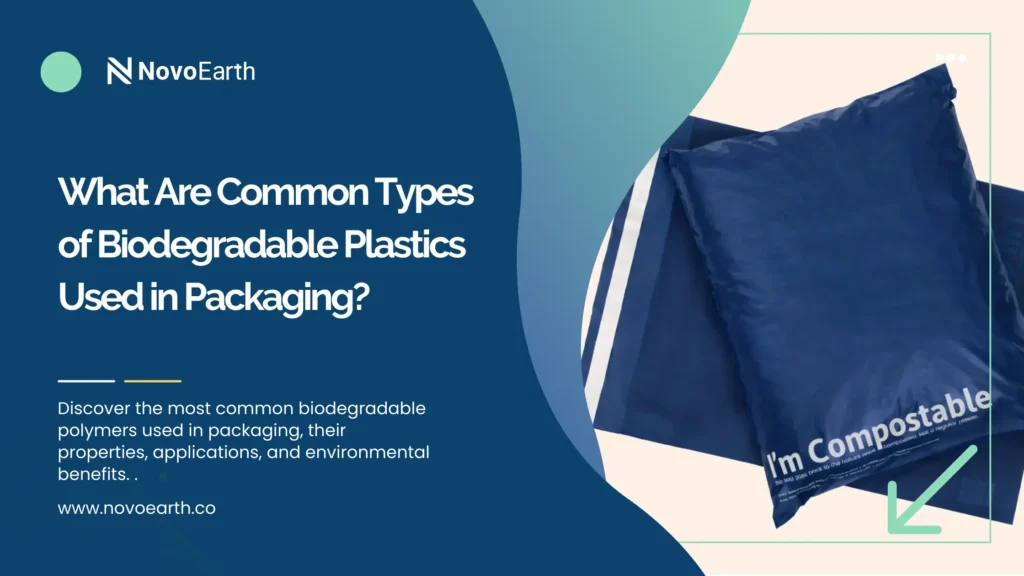
NovoEarth Novo Origins Our Material World Blogs Contact Us What Are Common Types of Biodegradable Plastics Used in Packaging? If you’re a packaging manufacturer, FMCG brand, sustainability manager, or startup exploring eco-friendly materials, this guide is for you. You’re likely facing increasing pressure from regulators, consumers, and global markets to reduce plastic waste and eliminate microplastics. Traditional plastics take 400–500 years to degrade and contribute to over 350 million tonnes of global plastic waste annually. The good news? Biodegradable Polymers are transforming the packaging industry. In this blog, we’ll break down the most common biodegradable polymers used in packaging, how they work, where they’re used, and how companies like NovoEarth are pushing innovation to create scalable, climate-positive material solutions. What Are Biodegradable Polymers? Biodegradable Polymers are materials that break down into natural substances like water, carbon dioxide, and biomass through the action of microorganisms under specific environmental conditions. Unlike conventional plastics, biodegradable polymers are designed to: Reduce landfill burden Lower carbon footprint Minimise microplastic formation Support circular economy models Some biodegradable polymers are compostable under industrial conditions, while others degrade in soil or marine environments depending on their formulation. Why Packaging Is Shifting Toward Biodegradable Polymers The packaging industry accounts for nearly 40% of total plastic usage globally. With bans on single-use plastics increasing across Europe, India, and North America, companies are actively switching to biodegradable polymers for: Food packaging Carry bags Mailer films Garbage liners Agricultural films The global biodegradable plastics market is projected to grow at over 9–12% CAGR, driven largely by packaging demand. Common Types of Biodegradable Polymers Used in Packaging 1. Polylactic Acid PLA is one of the most widely used biodegradable polymers in packaging. Source: Derived from renewable resources like corn starch or sugarcane. Key Properties: Transparent and glossy Good rigidity Industrially compostable Lower heat resistance (around 55–60°C) Common Applications: Disposable cups and trays Fresh produce packaging Compostable films PLA accounts for a significant share of the biodegradable polymers market due to its scalability and commercial viability. 2. Polyhydroxyalkanoates (PHA) PHA is a family of biodegradable polymers produced by microbial fermentation. Key Properties: Biodegradable in soil and marine environments Good barrier properties Flexible or rigid depending on grade Applications: Food packaging films Coatings Single-use packaging PHA-based biodegradable polymers are gaining traction due to their potential to degrade even in marine conditions — helping reduce ocean plastic pollution. 3. Starch-Based Biodegradable Polymers These biodegradable polymers are made by blending natural starch with biodegradable polyesters. Key Benefits: Cost-effective Compostable Lower carbon footprint Applications: Grocery bags Compostable liners Agricultural mulch films However, they may have lower moisture resistance compared to other biodegradable polymers. 4. Polybutylene Adipate Terephthalate (PBAT) PBAT is a flexible biodegradable polymer often blended with PLA or starch. Why It’s Important: High flexibility Strong tear resistance Compostable under industrial conditions Applications: Compostable carry bags Flexible packaging films Garbage liners PBAT improves the mechanical strength of biodegradable polymers used in flexible packaging. Comparison Table of Common Biodegradable Polymers Type Compostable Flexibility Heat Resistance Common Use PLA Industrial Medium Low Food trays, cups PHA Soil & Marine Medium-High Medium Food films Starch Blends Industrial Medium Low Carry bags PBAT Industrial High Medium Garbage liners This table helps brands choose the right biodegradable polymers based on packaging needs. How NovoEarth Is Advancing Biodegradable Polymers At NovoEarth, we are not just producing biodegradable polymers — we are engineering circular material systems. Our focus areas include: Biodegradable polymers for poly mailers and liners Solutions for agricultural mulch films Technology to eliminate microplastics Unlike traditional materials that fragment into microplastics, NovoEarth’s biodegradable polymers are designed to degrade responsibly under controlled conditions. We are working toward scalable material innovation that aligns with India’s EPR and global sustainability regulations. Key Benefits of Biodegradable Polymers in Packaging Here’s why companies are adopting biodegradable polymers: 🌱 Reduced carbon footprint 🌍 Lower landfill accumulation ♻ Supports circular economy 🚫 Helps reduce microplastic pollution 📈 Meets regulatory compliance However, biodegradable polymers must be selected carefully based on disposal infrastructure and application type. Challenges to Consider Let’s be practical — biodegradable polymers are not a magic fix. Require specific composting conditions Higher cost compared to conventional plastics Limited heat resistance in some grades Infrastructure gaps in developing markets Businesses must evaluate performance, disposal systems, and lifecycle assessment before switching to biodegradable polymers. Frequently Asked Questions 1. Are biodegradable polymers compostable? Not all biodegradable polymers are home compostable. Some require industrial composting conditions. 2. Do biodegradable polymers eliminate microplastics? High-quality biodegradable polymers can significantly reduce microplastic formation if properly designed. 3. Are biodegradable polymers safe for food packaging? Yes, many biodegradable polymers like PLA and PHA are food-contact approved. 4. Are biodegradable polymers more expensive? Currently, biodegradable polymers cost 20–50% more than conventional plastics, but prices are decreasing with scale. The Future of Biodegradable Polymers in Packaging With global plastic regulations tightening and consumers demanding transparency, biodegradable polymers are expected to play a major role in the next decade. However, the real transformation will come from companies that combine: Material innovation Recycling systems Microplastic elimination strategies This is exactly where NovoEarth is positioning itself. Take the Next Step Toward Sustainable Packaging If you are exploring biodegradable polymers for packaging, now is the time to transition. At NovoEarth.co, we are building scalable biodegradable polymer solutions tailored for real-world industrial use. 👉 Contact NovoEarth today to explore biodegradable polymers that align with your sustainability goals. About the Author Sarthak GuptaMechanical Engineer | Founder, NovoEarth Sarthak Gupta is a Mechanical Engineer and the founder of NovoEarth, a cleantech venture specialising in circular material innovation and sustainable polymer solutions. His expertise lies in biodegradable polymer technologies and recycling systems for multilayer plastics—complex waste streams traditionally considered non-recyclable. With prior Research and Development experience in renewable energy and wind turbine design, Sarthak focuses on translating engineering innovation into scalable, commercially viable climate solutions. Scroll To Top 2025 © NovoEarth. All right Reserved. Facebook Linkedin Instagram
Biodegradable Polymers and Their Applications: Advantages and Disadvantages
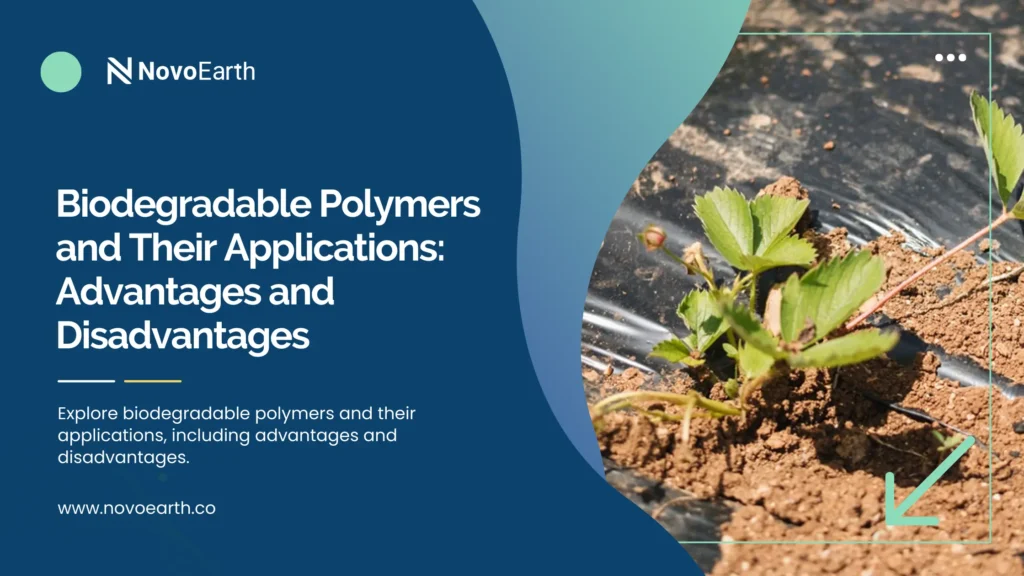
NovoEarth Novo Origins Our Material World Blogs Contact Us Biodegradable Polymers and Their Applications: Advantages and Disadvantages If you’re a manufacturer, sustainability officer, student, procurement manager, or business owner exploring sustainable materials, this guide is for you. There’s growing pressure to replace conventional plastics. But before switching, most decision-makers want clarity on biodegradable polymers and their applications, as well as the biodegradable polymers advantages and disadvantages in real industrial environments. Without clarity, companies risk choosing materials that don’t meet performance, cost, or regulatory expectations. This blog simplifies everything — explaining biodegradable polymers, their industrial and commercial applications, and clearly outlining their advantages and disadvantages with real data. What Are Biodegradable Polymers? Biodegradable polymers are materials that break down into water, carbon dioxide (or methane), and biomass through natural biological processes involving microorganisms. Unlike conventional plastics that can take 400–500 years to degrade, biodegradable polymers are designed to decompose in months under industrial composting conditions. Modern biodegradable polymers are engineered for: Mechanical strength Flexibility Heat resistance Compatibility with existing machinery Companies like NovoEarth are developing biodegradable polymers that not only degrade safely but also help reduce long-term microplastic generation from multilayer plastic waste streams. Biodegradable Polymers and Their Applications Let’s explore biodegradable polymers and their applications across industries. 1. Packaging Industry Food containers Compostable bags Stretch films Protective packaging Packaging represents nearly 45% of global biodegradable polymer demand. NovoEarth produces biodegradable polymers engineered for industrial packaging and logistics, enabling businesses to shift away from conventional multilayer plastics. 2. Agriculture & Mulch Films Applications include: Soil mulch films Seed coatings Sapling Bags Compostable nursery pots Traditional agricultural plastics leave microplastic residues in soil. Biodegradable polymers eliminate post-harvest removal costs and reduce soil contamination. NovoEarth is actively producing biodegradable mulch films that degrade safely under soil conditions. 3. Medical Applications Absorbable sutures Drug delivery systems Tissue engineering scaffolds Biodegradable polymers in healthcare reduce the need for secondary surgical removal procedures. 4. Automotive & Industrial Components Interior trims Acoustic insulation Injection-moulded parts Certain biodegradable polymers reduce lifecycle emissions by 30–70% compared to petroleum plastics. Biodegradable Polymers: Advantages and Disadvantages Understanding biodegradable polymers advantages and disadvantages is critical before adoption. Advantages of Biodegradable Polymers 🌱 1. Reduced Environmental Impact They decompose faster than traditional plastics, reducing long-term landfill accumulation. ♻ 2. Lower Carbon Footprint Some biodegradable polymers emit up to 60–70% less greenhouse gases during production. 🌍 3. Reduced Microplastic Pollution Properly engineered biodegradable polymers minimize persistent microplastic formation. 💼 4. Industrial Compatibility Modern formulations run on existing extrusion and molding lines. 📈 5. Regulatory Compliance Help industries meet plastic bans and ESG targets. Disadvantages of Biodegradable Polymers 💰 1. Higher Initial Cost Typically 10–30% more expensive than conventional plastics. 🏭 2. Composting Infrastructure Required Many biodegradable polymers require industrial composting conditions. ⚙ 3. Limited Recycling Compatibility Mixing with conventional plastic streams can complicate recycling. 📦 4. Performance Variation Not all biodegradable polymers perform equally under extreme heat or load. Comparison Table – Advantages and Disadvantages Factor Advantages Disadvantages Environmental Impact Reduces landfill waste Requires a composting system Carbon Emissions Lower lifecycle emissions Production scale still developing Industrial Use Compatible with machinery Slightly higher cost Microplastics Reduced long-term residue Not fully eliminated in all cases Market Growth of Biodegradable Polymers The global biodegradable polymers market: Valued at approx. USD 8–9 billion (2024) Expected to cross USD 22 billion by 2030 Growing at 14–16% CAGR Industrial packaging and agriculture are leading segments. India’s regulatory push and circular economy focus are accelerating demand for scalable solutions like those being developed at NovoEarth. Frequently Asked Questions (FAQ) What are biodegradable polymers and their applications? Biodegradable polymers are materials designed to decompose naturally through biological processes. Their applications include packaging, agriculture, healthcare, automotive components, and industrial films. What are biodegradable polymers advantages and disadvantages? Advantages include lower environmental impact, reduced microplastic accumulation, and lower carbon emissions. Disadvantages include higher cost and need for composting infrastructure in some cases. Are biodegradable polymers better than conventional plastics? In terms of environmental sustainability and microplastic reduction, yes. However, performance and cost considerations must be evaluated case-by-case. How is NovoEarth contributing to biodegradable polymers innovation? NovoEarth is developing advanced biodegradable polymers focused on industrial scalability, plastic film replacement, and the reduction of persistent microplastic waste streams. Sustainable materials are no longer optional — they are a competitive advantage. If your organisation is evaluating biodegradable polymers and their applications, NovoEarth can help you transition with performance-driven, scalable solutions tailored for industrial use. 👉 Connect with NovoEarth to explore biodegradable polymer integration.👉 Build circular, microplastic-reducing material systems today. About the Author Sarthak GuptaMechanical Engineer | Founder, NovoEarth Sarthak Gupta is a Mechanical Engineer and the founder of NovoEarth, a cleantech venture specialising in circular material innovation and sustainable polymer solutions. His expertise lies in biodegradable polymer technologies and recycling systems for multilayer plastics—complex waste streams traditionally considered non-recyclable. With prior Research and development experience in renewable energy and wind turbine design, Sarthak focuses on translating engineering innovation into scalable, commercially viable climate solutions. Scroll To Top 2025 © NovoEarth. All right Reserved. Facebook Linkedin Instagram
What Are the Top Biodegradable Polymer Products Available for Packaging?
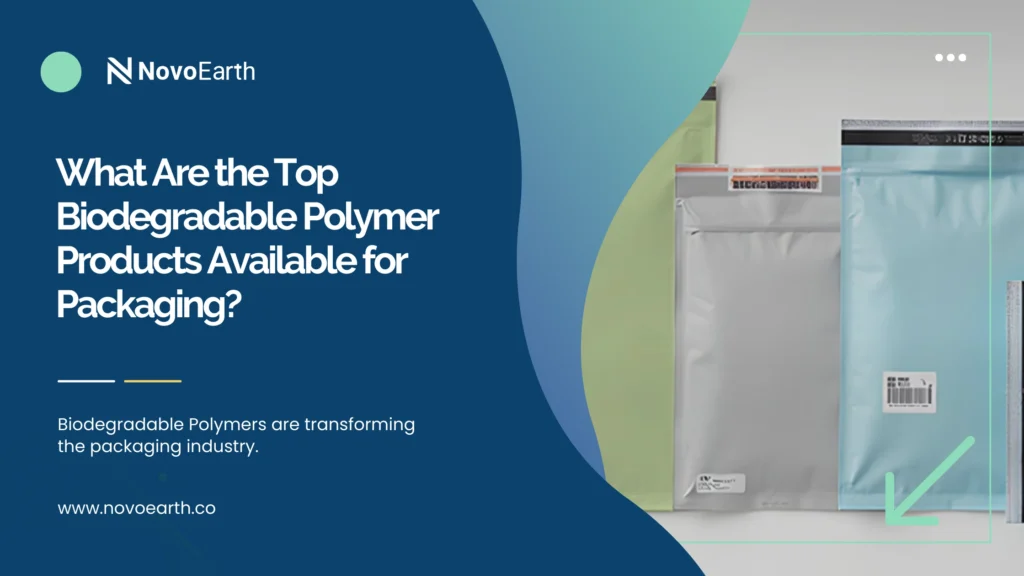
NovoEarth Novo Origins Our Material World Blogs Contact Us What Are the Top Biodegradable Polymer Products Available for Packaging? Are you a packaging manufacturer, brand owner, sustainability manager, or startup founder looking for eco-friendly alternatives to plastic? If yes, you’re likely facing increasing pressure from consumers and regulations to reduce plastic waste, carbon emissions, and microplastic pollution. Traditional plastics take 400–500 years to degrade, and globally we generate over 400 million tonnes of plastic waste annually. A significant portion ends up in landfills and oceans. The good news? Biodegradable Polymers are transforming the packaging industry. In this guide, we’ll break down the top biodegradable polymers used in packaging, supported by data, real-world applications, and practical insights—so you can make informed decisions. Why Biodegradable Polymers Are Reshaping Packaging Before we discuss specific products, let’s understand why biodegradable polymers matter. Key Market Data The global bioplastics market is projected to exceed 7.5 million tonnes by 2028 Packaging accounts for ~45% of total bioplastic consumption Consumer preference for sustainable packaging has increased by over 60% in the last 5 years What Makes Biodegradable Polymers Different? Biodegradable polymers: Break down through microbial action Decompose into water, CO₂, and biomass Reduce long-term microplastic accumulation Can be compostable under industrial or home conditions At NovoEarth, we focus on developing advanced biodegradable polymers that are not only compostable but engineered to reduce microplastic formation during degradation. Top Biodegradable Polymer Products Used in Packaging Below are the most widely used biodegradable polymers in packaging today. 1. Polylactic Acid (PLA) Overview PLA is one of the most commercially successful biodegradable polymers. It is derived from renewable sources like corn starch or sugarcane. Key Features Industrial compostable (90–180 days) Transparent and rigid Good printability Lower carbon footprint (up to 60% lower than conventional plastics) Packaging Applications Food containers Disposable cutlery Clamshell packaging Shrink films Limitation Requires industrial composting conditions (55–60°C) Brittle compared to traditional plastics PLA remains one of the most scalable biodegradable polymers for packaging. 2. Polyhydroxyalkanoates (PHA) PHA is considered next-generation biodegradable polymers. Why PHA Stands Out 100% bio-based Marine biodegradable Degrades in soil and compost Minimal microplastic residue Applications Flexible packaging films Coatings Single-use packaging Agricultural films Studies show PHA can degrade in marine conditions within 6–12 months, unlike conventional plastics. At NovoEarth, we are actively exploring polymer innovations that reduce environmental persistence and microplastic risks—moving beyond conventional bioplastics. 3. Starch-Based Biodegradable Polymers Starch blends are among the most cost-effective biodegradable polymers. Key Benefits Affordable Good compostability Flexible when blended Used In Carry bags Compostable mailers Food wrapping films However, pure starch-based biodegradable polymers have moisture sensitivity and limited strength, so they are often blended with PLA or PBAT. 4. Polybutylene Succinate (PBS) PBS is gaining traction among high-performance biodegradable polymers. Key Properties Good heat resistance Flexible Compostable Better mechanical strength than PLA Applications Mulch films Flexible packaging Disposable food trays PBS-based biodegradable polymers are suitable where higher temperature resistance is required. 5. Cellulose-Based Packaging Derived from plant fibers, cellulose films are natural biodegradable polymers. Applications Transparent packaging films Window films in paper packaging Coatings They decompose naturally and are often home-compostable. Comparison Table of Top Biodegradable Polymers Polymer Source Compostability Marine Degradation Typical Use PLA Corn/Sugarcane Industrial Limited Rigid packaging PHA Microbial fermentation Industrial + Marine Yes Films & coatings Starch Blends Corn/Potato Industrial/Home Limited Carry bags PBS Bio-based/Synthetic Industrial Moderate Flexible trays Cellulose Wood pulp Home Yes Films Environmental Impact Data Traditional plastics emit ~2.5 kg CO₂ per kg PLA emits ~1.3–1.8 kg CO₂ per kg Compostable packaging reduces landfill volume by up to 30% But here’s the honest truth:Not all biodegradable polymers are equal. If they end up in landfills without oxygen, degradation slows drastically. That’s why material innovation and waste system integration matter. NovoEarth is working on circular solutions, combining biodegradable polymers with recycling technologies for multilayer plastics to eliminate microplastics at scale. Key Factors to Consider Before Choosing Biodegradable Polymers 1. End-of-Life Infrastructure Is industrial composting available in your region? 2. Mechanical Requirements Does your packaging require flexibility or rigidity? 3. Moisture & Heat Resistance PLA softens above 60°C PBS performs better in heat 4. Certification Look for: EN 13432 ASTM D6400 IS/ISO compostability standards Challenges in the Biodegradable Polymers Industry Let’s be realistic. Cost is 1.5x–2x higher than conventional plastic Composting infrastructure is limited Greenwashing is common Some biodegradable polymers require specific environments The solution?Material innovation + waste ecosystem integration. That’s exactly where NovoEarth.co positions itself—engineering biodegradable polymers that minimize microplastic formation and enable circularity in multilayer plastic systems. Future of Biodegradable Polymers in Packaging By 2030: Regulations in Europe and India will tighten single-use plastic bans Brands will shift 25–40% packaging to biodegradable polymers Microplastic regulations will become stricter Companies that switch early gain brand equity, regulatory compliance, and investor confidence. How NovoEarth Is Leading the Change NovoEarth is not just producing biodegradable polymers. We are: Designing advanced circular materials Reducing microplastic generation Innovating in multilayer plastic recycling Making sustainable polymers commercially viable If your brand is serious about sustainable packaging, collaboration is no longer optional—it’s necessary. Frequently Asked Questions (FAQ) 1. Are biodegradable polymers completely eco-friendly? They are significantly better than conventional plastics, but proper disposal systems are necessary. 2. Do biodegradable polymers break down in oceans? Some like PHA do. PLA requires industrial composting. 3. Are biodegradable polymers food safe? Yes, many are certified for food contact. 4. Are biodegradable polymers expensive? Currently 20–100% more costly than conventional plastics. 5. Can biodegradable polymers replace all plastics? Not yet. Performance and infrastructure limitations exist. Ready to transition to high-performance biodegradable polymers? Visit NovoEarth.co today and explore how our sustainable polymer innovations can help your brand eliminate microplastics and achieve true circular packaging. Let’s build packaging that doesn’t harm the planet. About the Author Sarthak GuptaMechanical Engineer | Founder, NovoEarth Sarthak Gupta is a Mechanical Engineer and the founder of NovoEarth, a cleantech venture specialising in circular material innovation and sustainable polymer solutions.
Who Are the Manufacturers of Biodegradable Polymers in India?
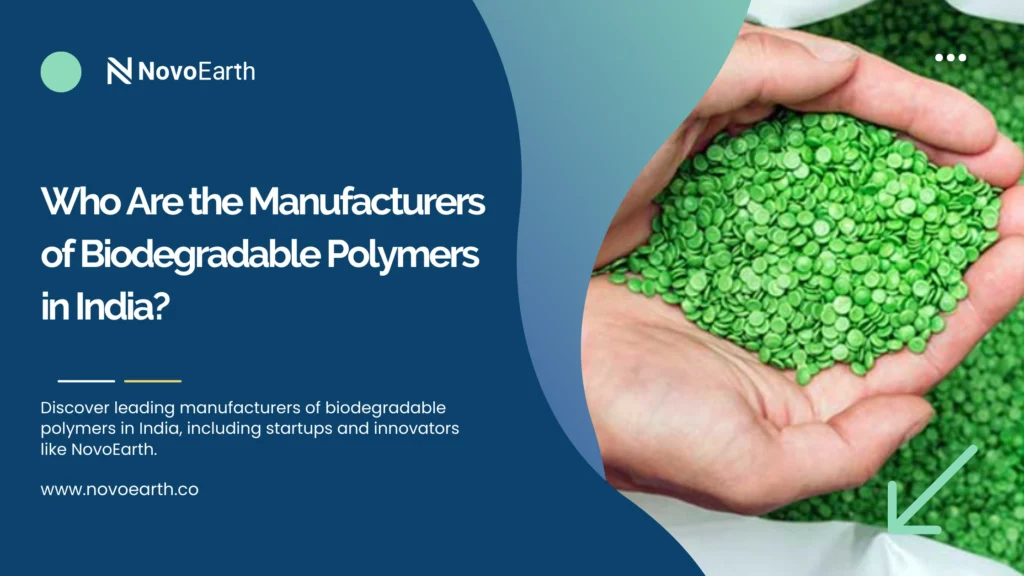
NovoEarth Novo Origins Our Material World Blogs Contact Us Who Are the Manufacturers of Biodegradable Polymers in India? If you are a packaging company, sustainability professional, startup founder, or researcher looking for alternatives to traditional plastic, you’ve likely heard about the rapid rise of biodegradable polymers. India generates over 3.5 million tonnes of plastic waste every year, and a significant portion ends up in landfills or oceans. Traditional plastics take hundreds of years to decompose, contributing to microplastic pollution and environmental damage. This is where biodegradable polymers come into play. These materials are designed to break down naturally through microbial activity, reducing long-term environmental impact. In recent years, several Indian manufacturers and startups have begun producing biodegradable polymers, helping industries transition toward sustainable materials. In this blog, we will explore leading biodegradable polymer manufacturers in India, their technologies, and how companies like NovoEarth are shaping the future of sustainable materials. What Are Biodegradable Polymers? Biodegradable polymers are materials that can break down into water, carbon dioxide, methane, and biomass through natural microbial processes. Key Characteristics Derived from renewable resources such as starch, cellulose, or plant oils Decompose under specific environmental conditions Designed to reduce long-term plastic pollution Used in industries like agriculture, packaging, medical devices, and consumer goods Examples of Common Biodegradable Polymers Polymer Type Source Common Applications PLA (Polylactic Acid) Corn starch/sugarcane Packaging, 3D printing PHA (Polyhydroxyalkanoates) Microbial fermentation Medical implants, packaging PBS (Polybutylene Succinate) Bio-based chemicals Agricultural films Starch-based Polymers Plant starch Compostable bags The increasing demand for biodegradable polymers in India is pushing companies to develop innovative materials that reduce microplastic formation. Why India Is Becoming a Hub for Biodegradable Polymer Manufacturing India’s biodegradable polymer industry is expanding due to several factors: 1. Government Regulations India has implemented single-use plastic bans in multiple states, encouraging industries to adopt biodegradable polymers. 2. Growing Sustainability Awareness Consumers and businesses are actively searching for eco-friendly alternatives to conventional plastics. 3. Rising Investment in Cleantech Startups Sustainable material startups are attracting funding and partnerships from global investors. 4. Increasing Demand from Agriculture & E-commerce Industries such as agriculture films, garbage liners, and poly mailers are adopting biodegradable polymers to reduce environmental impact. Leading Manufacturers of Biodegradable Polymers in India India now hosts several companies working on biodegradable polymer technologies and sustainable materials. Major Companies Producing Biodegradable Polymers Company Focus Area Key Applications Reliance Industries (Bio-based initiatives) Sustainable materials R&D Packaging Truegreen Compostable plastics Carry bags, packaging Envigreen Biotech Starch-based biodegradable polymers Retail bags Bakeys Edible and biodegradable materials Cutlery Greenworks Compostable polymer materials Packaging These companies contribute to the growing ecosystem of biodegradable polymer manufacturers in India. Emerging Startups Driving Sustainable Polymer Innovation Beyond large manufacturers, several Indian startups are developing advanced biodegradable polymer solutions. Notable Trends Among Startups Development of agricultural biodegradable films Alternatives to poly mailers and garbage liners Research into microplastic-free materials Circular economy solutions for plastic waste management These startups are accelerating the adoption of biodegradable polymers across industries. NovoEarth – Advancing Biodegradable Polymer Innovation in India Among emerging innovators, NovoEarth is developing advanced biodegradable polymer solutions designed to eliminate microplastic pollution. What Makes NovoEarth Different? Focus on circular material innovation Development of biodegradable polymers for real-world industrial applications Solutions targeting complex plastic waste streams Materials designed to reduce long-term microplastic accumulation Applications NovoEarth Focuses On Poly e-mailers Garbage liners Agricultural mulching materials Sustainable polymer alternatives for high-volume plastic products By focusing on scalable solutions, NovoEarth aims to accelerate the transition from traditional plastics to biodegradable polymers. Industries Using Biodegradable Polymers in India The demand for biodegradable polymers is growing across multiple industries. Agriculture Mulching films Plant protection sheets Compostable seed coatings Logistics & E-commerce Poly mailers Tamper-Proof Protective Packaging Waste Management Garbage liners Compostable waste bags Medical & Healthcare Drug delivery systems Biodegradable sutures Future Growth of the Biodegradable Polymer Industry in India The biodegradable polymer market in India is expected to grow rapidly. Key Market Insights Global biodegradable polymer market expected to reach $23–25 billion by 2030 Demand for sustainable materials is growing at 10–15% annually Increasing government support and environmental regulations As innovation continues, biodegradable polymers will play a major role in reducing plastic waste and microplastic pollution. Why Businesses Should Consider Biodegradable Polymers Switching to biodegradable polymers offers several benefits: Environmental Benefits Reduces long-term plastic pollution Lower microplastic formation Supports circular economy, models Business Benefits Compliance with plastic regulations Improved brand sustainability reputation Growing consumer preference for eco-friendly products Frequently Asked Questions (FAQs) Which companies specialise in manufacturing biodegradable polymers for medical use? Companies working on medical-grade biodegradable polymers typically focus on materials such as PLA, PHA, and bioresorbable polymers used in sutures, implants, and drug delivery systems. Many global manufacturers operate in this field, while Indian research institutions and startups are gradually entering the space. Can I find biodegradable polymer suppliers in India? Yes. India has several biodegradable polymer manufacturers and suppliers, including startups and established companies producing compostable plastics for packaging, agriculture, and waste management. Which Indian startups focus on developing biodegradable polymer solutions? Several startups are working on biodegradable polymer innovation, including NovoEarth and other sustainability-focused material science ventures aiming to reduce plastic waste and microplastics. What types of biodegradable polymers are commonly manufactured in India? Indian manufacturers produce Biodegradable Polymers such as PLA, PHA, PBS, and starch-based polymers. These materials are widely used in agricultural films, compostable packaging, and sustainable products. Are biodegradable polymers completely eco-friendly? Biodegradable Polymers break down into water, carbon dioxide, and biomass under suitable conditions. They are more sustainable than conventional plastics but still require proper disposal systems. How long do biodegradable polymers take to decompose? Most Biodegradable Polymers can decompose within 3–6 months in industrial composting conditions, while some may take longer in natural environments. Which industries are adopting biodegradable polymers in India? Industries using Biodegradable Polymers include agriculture, e-commerce packaging, waste management, and healthcare applications. How do biodegradable polymers help reduce microplastic pollution? Properly designed Biodegradable Polymers degrade through
What are Biodegradable Polymers? Market Insights, Synthetic Types & Real-World Examples
NovoEarth Novo Origins Our Material World Blogs Contact Us What are Biodegradable Polymers? Market Insights, Synthetic Types & Real-World Examples If you’re a manufacturer, brand owner, packaging buyer, sustainability professional, policymaker, or eco-conscious business, this guide about Biodegradable Polymers is written especially for you. Traditional plastics take 400–1,000 years to decompose, clog landfills, pollute oceans, and increase carbon emissions. With plastic bans rising globally, businesses are struggling to find practical, scalable alternatives. That’s where biodegradable polymers come in—materials designed to break down naturally, reduce environmental impact, and still perform like conventional plastics. In this blog, we’ll break down: What biodegradable polymers are Synthetic biodegradable polymers explained simply Biodegradable polymers market size & trends Real-world examples you can relate to What Are Biodegradable Polymers? Biodegradable polymers are materials that decompose naturally through the action of microorganisms like bacteria and fungi into water, carbon dioxide, and biomass. Unlike conventional plastics, biodegradable polymers: Do not leave microplastic residue Have a lower carbon footprint Support circular and sustainable economies 📊 Fact: According to global waste studies, only 9% of plastic ever produced is recycled, while biodegradable polymers help reduce landfill dependency significantly. Types of Biodegradable Polymers Biodegradable polymers are broadly classified into natural and synthetic biodegradable polymers. Type Source Example Natural Plants & animals Starch, cellulose, PHA Synthetic Chemically synthesized PLA, PBAT , PBS What Are Synthetic Biodegradable Polymers? Synthetic biodegradable polymers are man-made polymers engineered to decompose under specific environmental conditions, like composting or soil exposure. They combine performance + sustainability, making them ideal for industrial use. Common Synthetic Biodegradable Polymers Polylactic Acid (PLA) Made from corn starch or sugarcane Widely used in packaging & disposable cutlery Compostable within 90–180 days under industrial composting Polybutylene adipate terephthalate (PBAT) Despite being made from oil, its chemical structure is designed to be easily broken down by microbial enzymes. It is 100% biodegradable and compostable Polybutylene Succinate (PBS) Heat-resistant and flexible Ideal for mulch films and food packaging 📊 Performance Insight: Synthetic biodegradable polymers can reduce greenhouse gas emissions by 30–70% compared to petroleum-based plastics. Biodegradable Polymers Market Size & Growth The market is growing rapidly due to sustainability regulations and consumer demand. Market Snapshot Metric Value Global Market Size (2024) USD 7.5 billion Expected Market Size (2030) USD 22+ billion CAGR 15–17% annually 🌱 India Focus:India’s biodegradable polymers market is expected to grow at 18% CAGR, driven by: Single-use plastic bans Government sustainability initiatives Rising eco-aware consumers Real-World Examples: Here’s how biodegradable polymers are already being used in everyday life: Packaging Industry Compostable carry bags Food containers Flexible packaging films Agriculture Biodegradable mulch films Controlled-release fertilizer coatings Medical Applications Surgical sutures Drug delivery systems Tissue scaffolds Consumer Goods Disposable cutlery Plates and cups Garbage liners 📊 Impact Data: Switching to biodegradable polymers in packaging can reduce plastic waste by up to 60% annually for FMCG brands. Biodegradable vs Compostable Polymers Many people confuse biodegradable polymers with compostable ones. Feature Biodegradable Polymers Compostable Polymers Breakdown Natural environments Compost conditions Timeframe Variable Fixed (90–180 days) Certification Optional Mandatory 👉 Key Takeaway: All compostable polymers are biodegradable, but not all biodegradable polymers are compostable. Why Businesses Are Switching to Biodegradable Polymers Compliance with plastic bans Improved brand reputation Reduced environmental footprint Future-ready sustainability strategy 📈 Consumer Insight: 73% of consumers prefer brands using sustainable packaging. Frequently Asked Questions Are biodegradable polymers completely eco-friendly? Yes, when disposed of correctly, biodegradable polymers significantly reduce pollution and waste. How long do biodegradable polymers take to degrade? Depending on the material and conditions, 3 months to 2 years. Are biodegradable polymers expensive? Initially, yes, but costs are dropping by 10–15% annually due to scaling and innovation. Can biodegradable polymers replace plastic entirely? Not entirely yet, but they are ideal for packaging, agriculture, and disposables. Why NovoEarth Is Leading the Change At NovoEarth, we specialise in next-generation biodegradable polymers designed for real-world performance and sustainability. What NovoEarth Offers: High-quality biodegradable polymer solutions Custom formulations for packaging & industrial use Compliance with global sustainability standards Ready to Switch to Biodegradable Polymers? Partner with NovoEarth.co to future-proof your business with innovative biodegradable polymer solutions. Visit: https://novoearth.coTalk to our sustainability experts today About the Author Sarthak Gupta is a Mechanical Engineer and the founder of NovoEarth, a cleantech venture specialising in circular material innovation and sustainable polymer solutions. His expertise lies in biodegradable polymer technologies and recycling systems for multilayer plastics—complex waste streams traditionally considered non-recyclable. With prior experience in renewable energy and wind turbine design, Sarthak focuses on translating engineering innovation into scalable, commercially viable climate solutions. Scroll To Top 2025 © NovoEarth. All right Reserved. Facebook Linkedin Instagram
Use of Biodegradable Polymers in Industrial Settings
NovoEarth Novo Origins Our Material World Blogs Contact Us Use of Biodegradable Polymers in Industrial Settings If you are an industrial manufacturer, ESG leader, procurement manager, packaging converter, or sustainability strategist, this guide about Use of Biodegradable Polymers is written for you. Industrial operations rely heavily on conventional plastics for packaging, storage, and processing. However, these materials generate long-term waste and contribute significantly to microplastic pollution, which is now found in oceans, soil, and even human bloodstreams. With over 400 million tons of plastic waste generated annually, industries are under increasing pressure to adopt responsible alternatives. The solution lies in advanced biodegradable polymers engineered for industrial performance. This blog explores how biodegradable polymers are being used in industrial settings, supported by real data, applications, and insights into innovative organisations leading this transition. What Are Biodegradable Polymers in Industrial Context? In industrial settings, biodegradable polymers are high-performance materials designed to deliver strength, flexibility, and process compatibility—while being capable of degrading under biological conditions. Modern biodegradable polymers: Operate on existing extrusion & molding lines Offer comparable tensile strength to LDPE & PP Reduce carbon footprint by 30–70% Minimise long-term microplastic accumulation At NovoEarth, biodegradable polymers are engineered not only for compostability but also with a long-term vision of reducing microplastic generation. Why Industries Are Transitioning to Biodegradable Polymers Key Drivers Global plastic restrictions in 60+ countries ESG & sustainability reporting requirements Extended Producer Responsibility (EPR) mandates Carbon tax implications Quantifiable Insights The biodegradable polymers market is growing at 14–16% CAGR Industrial packaging contributes nearly 45% of biodegradable polymer demand Over 35% of global corporations have pledged to shift to sustainable packaging by 2030 Biodegradable polymers are no longer experimental—they are becoming central to industrial sustainability strategies. Major Industrial Applications of Biodegradable Polymers Biodegradable polymers are no longer limited to niche or experimental use. Today, they are being integrated into high-volume industrial operations where performance, scalability, and cost-efficiency are critical. NovoEarth is actively contributing to this shift by producing advanced biodegradable polymers engineered specifically for industrial packaging, logistics, and agricultural applications — including high-performance mulch films designed to eliminate long-term soil plastic residue. Below are the major industrial applications driving adoption: 1. Industrial Packaging & Logistics. Industrial packaging accounts for nearly 45% of total biodegradable polymer demand globally. The sector requires materials that are durable, flexible, and compatible with automated systems. Applications Include: Secondary packaging liners Protective industrial films Bulk transport packaging Modern biodegradable polymers used in industrial packaging offer: High tensile strength Moisture resistance Thermal stability during transport Compatibility with existing extrusion and film-blowing machinery NovoEarth produces biodegradable polymers specifically engineered for industrial packaging and logistics. These materials are designed to replace conventional plastics while maintaining performance standards required in warehouses, export operations, and supply chains. By integrating biodegradable polymers into packaging systems, industries can significantly reduce landfill waste and microplastic generation from secondary and tertiary packaging streams. 2. Agriculture & Agro-Industrial Applications. Agriculture is one of the fastest-growing sectors for biodegradable polymers. Traditional polyethylene mulch films leave plastic fragments in soil, contributing to long-term microplastic contamination and increasing soil remediation costs. Biodegradable Polymer Applications in Agriculture: Soil mulch films Seed coatings Controlled fertilizer release systems Compostable nursery bags Compostable sapling bags NovoEarth is producing biodegradable polymer-based mulch films designed for agro-industrial applications. These mulch films: Degrade under soil conditions Eliminate post-harvest plastic collection Reduce microplastic accumulation Lower labour and disposal costs This innovation directly addresses one of the biggest environmental challenges in agriculture—residual plastic fragments in soil ecosystems. By offering biodegradable polymers tailored for agricultural environments, NovoEarth supports farmers and agro-industries in transitioning toward circular and soil-safe material systems. 3. Engineering, Manufacturing & Industrial Components Beyond packaging and agriculture, biodegradable polymers are being explored in: Industrial non-woven fabrics Automotive interior trims Temporary protective components Injection-moulded parts These applications demonstrate that biodegradable polymers can meet industrial mechanical requirements while improving end-of-life sustainability. Why This Matters The industrial use of biodegradable polymers is not just about replacing plastic. It is about: Reducing microplastic leakage Lowering lifecycle carbon emissions Aligning with ESG targets Meeting regulatory compliance With scalable material innovation and focus on eliminating persistent plastic waste, NovoEarth is positioning biodegradable polymers as a practical industrial solution—not just an environmental alternative. How NovoEarth Supports Industrial Transition NovoEarth is focused on developing advanced biodegradable polymers and circular material systems designed for: Replacement of non-recyclable multilayer plastics Industrial compostable pellet solutions Reduction of persistent microplastic generation Scalable integration into existing machinery By converting complex waste streams into sustainable polymer materials, NovoEarth aims to bridge the gap between industrial performance and environmental responsibility. Comparison: Biodegradable vs Conventional Polymers Parameter Biodegradable Polymers Conventional Plastics Raw Material Renewable / Engineered Fossil fuel-based Degradation Months (industrial composting) 400+ years Microplastic Impact Minimal long-term residue Significant Carbon Emissions 30–70% lower High End-of-Life Management Compostable Landfill / Ocean Market Outlook for Industrial Use The global biodegradable polymers market is projected to surpass USD 22 billion by 2030, with industrial packaging and agriculture leading adoption. India’s regulatory landscape is accelerating this shift, creating opportunities for innovative material producers such as NovoEarth to deliver scalable biodegradable polymer solutions. Frequently Asked Questions (FAQ) 1. Are biodegradable polymers strong enough for industrial use? Yes. these are engineered to match the mechanical properties of traditional industrial plastics. 2. Can biodegradable polymers run on existing industrial machinery? In several cases, yes. Some materials are designed for compatibility with standard extrusion and moulding systems. 3. Companies working on innovative biodegradable materials? Several global and regional companies are advancing biodegradable polymer technologies across packaging, agriculture, and industrial sectors. Among emerging cleantech innovators, NovoEarth is actively developing sustainable polymers designed to replace multilayer plastics and reduce microplastic pollution. The company focuses on circular material innovation and scalable industrial integration. 4. Organisations working on innovative biodegradable materials? Organisations working on innovative biodegradable materials include: Cleantech startups Polymer research institutes Sustainable packaging manufacturers Circular economy ventures NovoEarth operates at the intersection of material science and industrial scalability, focusing on converting traditionally non-recyclable plastic waste into biodegradable polymer solutions aligned with circular economy principles. 5. Do biodegradable polymers eliminate microplastics? While no material eliminates all