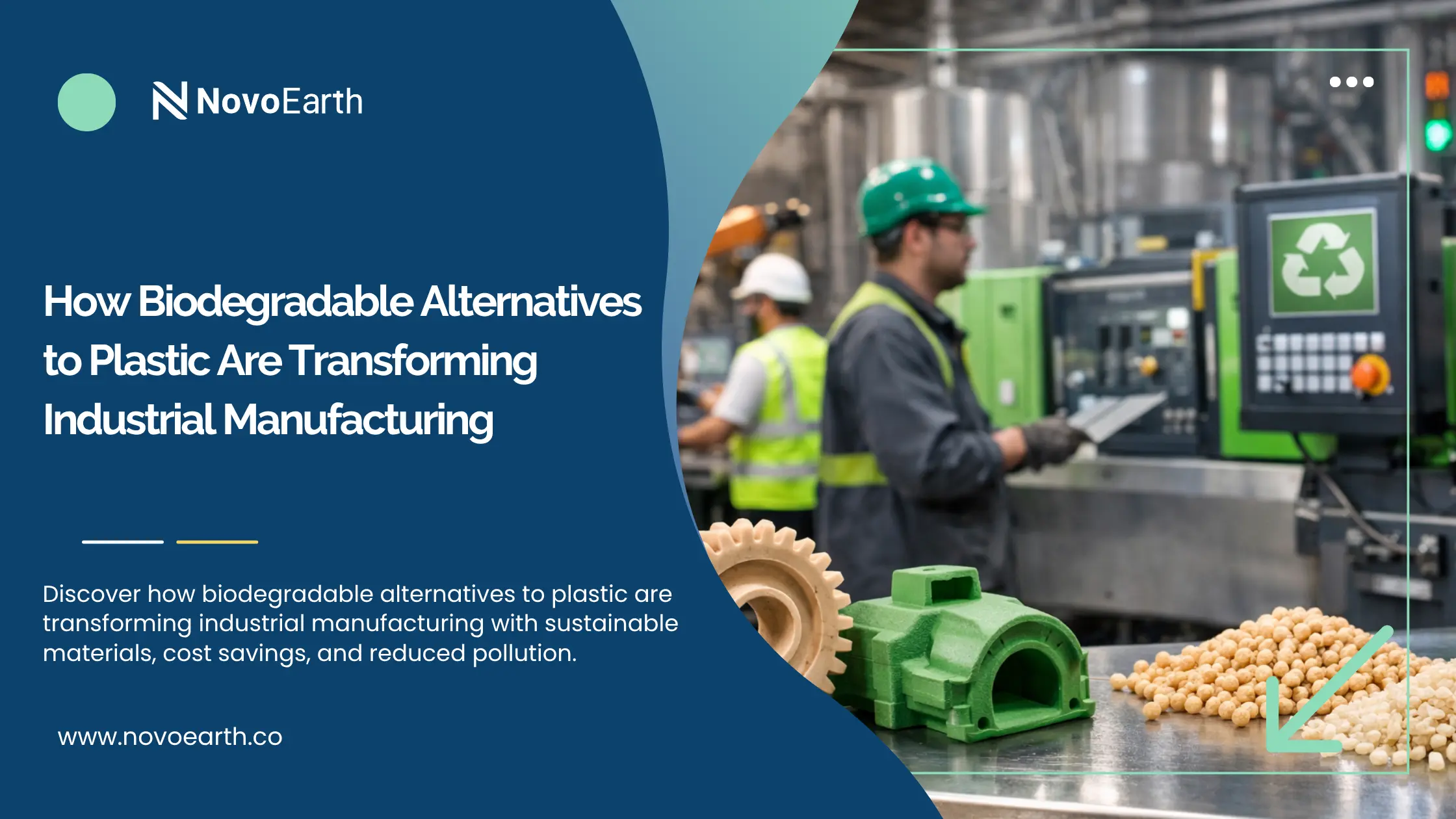
How Biodegradable Alternatives to Plastic Are Transforming Industrial Manufacturing
There’s a clear shift happening in the materials world—and if you’re an industrial manufacturer, product innovator, or sustainability leader, you’re already experiencing it firsthand.
Plastic is no longer just a material choice; it’s becoming a strategic concern.
- Regulations are tightening across markets, making compliance more complex and critical
- Waste management costs are rising, directly impacting operational efficiency
- Customers and stakeholders are demanding accountability, pushing brands toward transparency
What once worked as a reliable, low-cost solution is now under pressure.
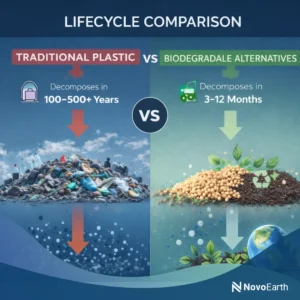
- Conventional plastics can take up to 500 years to degrade
- Landfill volumes are increasing, adding long-term cost and environmental burden
- Microplastic pollution is becoming a global issue, affecting ecosystems and brand perception
For businesses, this is no longer just about sustainability—it’s about risk management, brand positioning, and future readiness.
This is where biodegradable alternatives come into play—not as a short-term fix, but as a smarter material strategy.
- Designed to reduce environmental impact without compromising performance
- Aligned with circular economy goals and evolving regulations
- Enabling businesses to stay competitive and responsible at the same time
This isn’t a passing trend. It’s a fundamental shift in how industries think about materials, performance, and long-term value.
What Are Biodegradable Alternatives to Plastic?
Biodegradable alternatives to plastic are materials that break down naturally into non-toxic components through biological processes.
Key Characteristics:
- Decompose within 3–12 months (vs. centuries for plastic)
- Reduce short term microplastic formation by up to 90% and long term completely.
- Derived from renewable or engineered sustainable polymers
- Suitable for industrial applications like:
- Automotive components
- Construction materials
- Electrical casings
- Industrial films
- Agriculture
- Logistics
Why Industries Are Moving Toward Biodegradable Alternatives to Plastic
1. Regulatory Pressure is Increasing
Governments globally are restricting traditional plastics:
- Over 120 countries have partial bans on plastic usage
- Industrial compliance costs have increased by 25–40%
2. Cost Efficiency Over Time
While initial costs may be higher:
- Waste management costs drop by 30–50%
- Lifecycle costs become lower within 2–3 years
3. Sustainability as a Competitive Advantage
- 70% of B2B buyers prefer eco-conscious suppliers
- ESG-driven companies report 18% higher brand trust
Types of Biodegradable Alternatives to Plastic Used in Industry
Material Type | Key Property | Industrial Use Case |
PLA (Polylactic Acid) | Lightweight, compostable | 3D printing, casings |
PHA (Polyhydroxyalkanoates) | Fully biodegradable | Automotive interiors |
Starch-Based Polymers | Cost-effective | Industrial films |
Cellulose-Based Materials | High strength | Structural components |
Real Industrial Applications of Biodegradable Alternatives to Plastic
Automotive Industry
Construction Sector
- Temporary structures and insulation materials
- Reduces construction waste by up to 60%
Electronics Manufacturing
- Biodegradable casings reduce e-waste impact
- Lower toxicity in disposal processes
How NovoEarth is Driving Innovation in Biodegradable Alternatives to Plastic
NovoEarth is not just participating in this shift—it is actively shaping it.
What NovoEarth Does:
- Develops advanced biodegradable polymer solutions
- Focuses on eliminating microplastic pollution
- Works on circular material innovation
- Specialises in custom plastic alternatives
Impact:
- Helps industries reduce plastic dependency by 40–60%
- Enables scalable, commercially viable, & sustainable solutions
Benefits of Biodegradable Alternatives to Plastic in Manufacturing
Environmental Benefits
- Reduces landfill waste significantly
- Minimises microplastic contamination
- Cuts carbon footprint by up to 30%
Operational Benefits
- Easier waste handling
- Lower compliance costs
- Improved brand positioning
Economic Benefits
- Long-term savings
- Better investor appeal
- Increased market competitiveness
Challenges You Should Not Ignore
Let’s be honest—this transition is not perfect.
Key Challenges:
- Higher upfront costs (10–20%)
- Limited infrastructure for composting in some regions
- Performance limitations in extreme conditions
Brutal Truth:
If your product requires high durability for decades, not all biodegradable alternatives to plastic will work. Blind adoption will hurt your product quality.
Future Trends in Biodegradable Alternatives to Plastic
- Smart biodegradable polymers with controlled degradation timing
- Industrial-scale adoption in heavy manufacturing
- Integration with AI-driven material design
- Global market expected to reach $30+ billion by 2030
How to Start Using Biodegradable Alternatives to Plastic in Your Industry
Step-by-Step Approach:
- Audit your current plastic usage
- Identify replaceable components
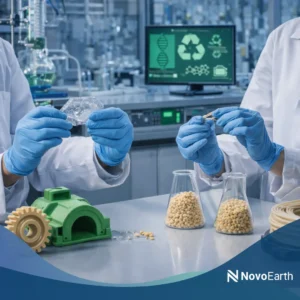
- Test biodegradable materials for performance
- Partner with innovators like NovoEarth
- Scale gradually
FAQs on Biodegradable Alternatives to Plastic
Q1: Are biodegradable alternatives to plastic as strong as traditional plastics?
Not always. Some match performance, but others are application-specific.
Q2: Do they completely eliminate pollution?
They significantly reduce it, especially microplastics, but require proper disposal systems.
Q3: Are they expensive?
Initially, yes but lifecycle costs are often lower.
Q4: Can all industries adopt them?
Most can, but high-durability sectors need selective implementation.
Conclusion
Biodegradable alternatives to plastic are no longer optional—they are becoming a strategic necessity for industrial manufacturing.
The companies that adapt early will:
- Save costs
- Stay compliant
- Build stronger brands
Those who don’t will struggle to keep up.
🚀 Ready to shift towards smarter materials?
NovoEarth is building the future of biodegradable alternatives to plastic—scalable, practical, and designed for real impact.
👉 Partner with NovoEarth to integrate sustainable polymers into your business and stay ahead of regulations, costs, and environmental risks.
About the Author
Sarthak Gupta
Mechanical Engineer & Founder, NovoEarth
Sarthak Gupta is a Mechanical Engineer and the founder of NovoEarth, a cleantech venture specialising in circular material innovation and sustainable polymer solutions. His expertise lies in biodegradable polymer technologies and recycling systems for multilayer plastics—complex waste streams traditionally considered non-recyclable. With prior research and development experience in renewable energy and wind turbine design, Sarthak focuses on translating engineering innovation into scalable, commercially viable climate solutions.