
Close

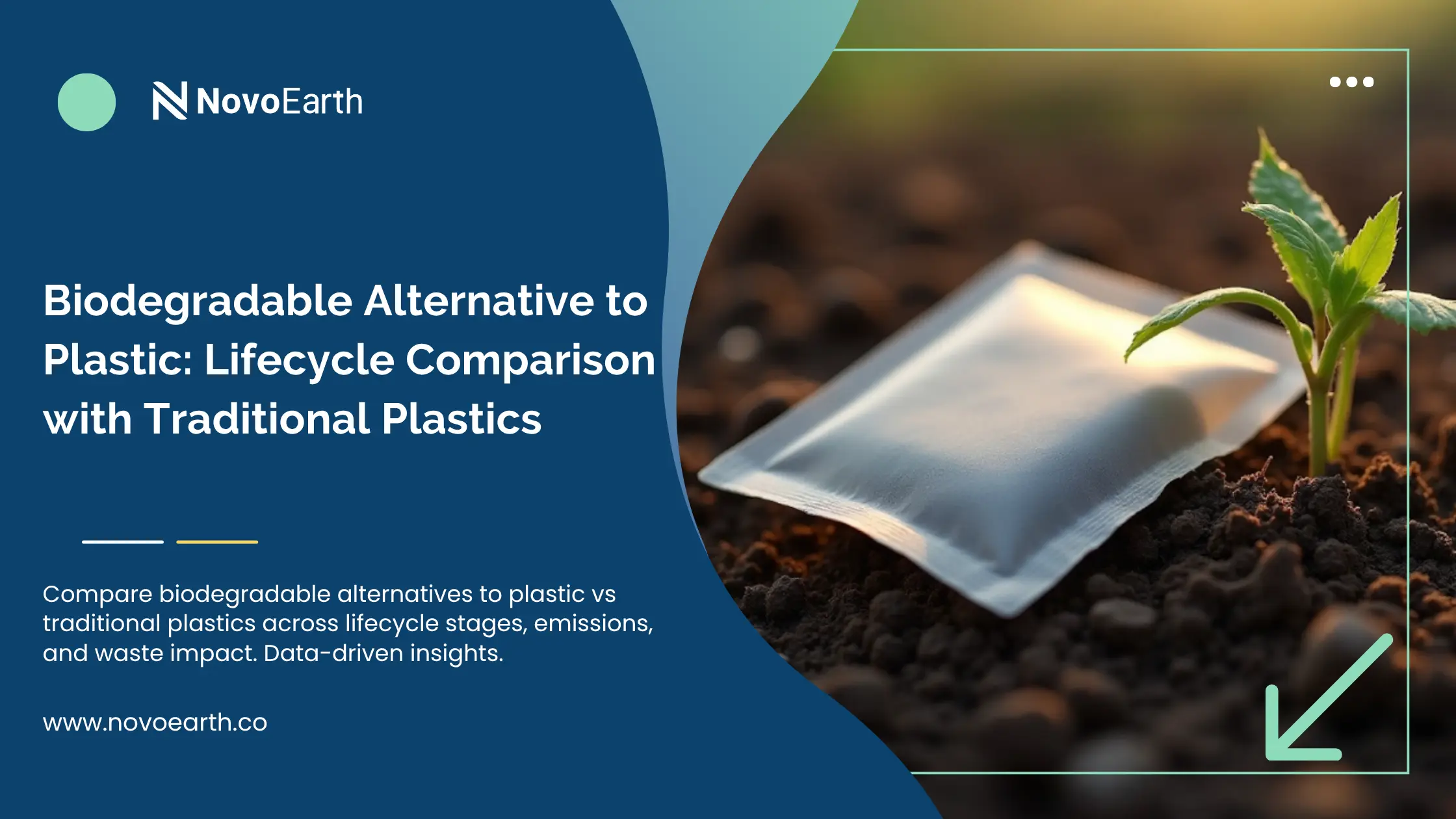
Every day, your business grapples with the plastic paradox: the need for functional materials versus the inescapable environmental fallout. You’ve heard the buzz around biodegradable alternatives to plastic as the silver bullet. But if your sustainability strategy is based only on “faster decomposition,” you’re missing the entire picture.
The mainstream conversation is shallow and frankly, dangerous. It glosses over the critical truth: decomposition time is only the final act. To drive genuine, measurable change, you must evaluate the full lifecycle impact—from sourcing raw materials and manufacturing emissions to the final end-of-life disposal, including the hidden threat of microplastics.
This is not another greenwashing article. This definitive breakdown leverages real data and a rigorous Life Cycle Assessment (LCA) framework. You will gain precise, data-driven insights to clearly benchmark where biodegradable alternatives to plastic genuinely outperform traditional plastics—and critically, where they fall short. Get ready to move beyond assumptions and build a truly sustainable material strategy.
Lifecycle comparison evaluates environmental impact across 5 stages:
This is called Life Cycle Assessment (LCA).
👉 The mistake most people make:
They compare only the last stage (decomposition) and ignore the rest. That leads to wrong conclusions.
Metric | Traditional Plastics | Biodegradable Alternatives to Plastic |
Raw Material Source | Fossil fuels | Renewable biomass/waste feedstock |
Energy Consumption | High (80–100 MJ/kg) | 20–50% lower |
Carbon Emissions | ~2.5–3.5 kg CO₂/kg | 30–70% lower |
Decomposition Time | 400+ years | Months to a few years |
Microplastic Generation | Severe | Minimal to none |
Waste Recovery | Low recycling rate (~9%) | Compostable/degradable |
📌 Key Insight:
The real strength of biodegradable alternatives to plastic is not just faster decomposition—it’s reduced lifecycle emissions and elimination of microplastic leakage.
Traditional Plastics
Biodegradable Alternatives to Plastic
👉 Reality check:
Not all biodegradable polymers are equal—some still rely on industrial inputs. So don’t blindly assume “green”.
Here’s the uncomfortable truth:
👉 Many biodegradable alternatives to plastic still match durability requirements, but:
So if your application needs extreme durability, switching blindly is a bad decision.
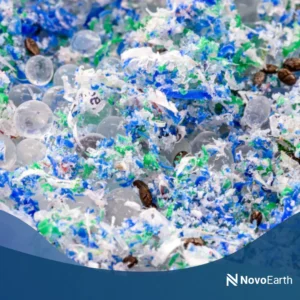
📌 This is where the biggest environmental advantage exists.
👉 Traditional plastics create a permanent pollution loop
👉 Biodegradable alternatives to plastic aim to break that loop
Most companies talk about sustainability. Few solve the real problem.
NovoEarth is working on:
👉 This is important:
Recycling alone won’t fix plastic pollution.
You need material innovation, and that’s exactly where NovoEarth is focused.

Let’s not pretend it’s perfect.
👉 Brutal truth:
Switching materials without system support = no real impact
Use biodegradable alternatives to plastic if:
✔ Your product contributes to environmental leakage
✔ Recycling is not feasible
✔ Microplastic risk is high
✔ You want long-term regulatory compliance
Avoid switching if:
❌ Your application requires extreme durability
❌ You lack disposal infrastructure
❌ You’re doing it just for marketing
No. They are better, but not impact-free. Lifecycle emissions still exist.
Yes, most high-quality biodegradable polymers do not create persistent microplastics.
Currently slightly expensive, but costs are decreasing with scale.
No. They are suitable for specific applications, not all.
Depends. For single use applications , biodegradable alternatives are often better.
LCA is a framework used to evaluate the environmental impact of a material across five stages: extraction, manufacturing, transportation, usage, and disposal.
They are typically derived from renewable biomass or waste feedstock, unlike traditional plastics which come from fossil fuels.
Biodegradable alternatives can require 30–50% less energy to produce compared to the intensive cracking and polymerisation of traditional plastics.
Challenges include higher current costs, the need for specific disposal conditions (like industrial composting), and limited regional infrastructure.
NovoEarth focuses on material innovation, specifically advanced biodegradable polymer technologies and solutions for hard-to-recycle multilayer plastics.
If you’re serious about reducing plastic impact—not just talking about it—
NovoEarth is building the materials that make it possible.
👉 Explore sustainable polymer solutions at NovoEarth.co
👉 Start transitioning toward microplastic-free materials today
Sarthak Gupta
Mechanical Engineer & Founder, NovoEarth
Sarthak Gupta is a Mechanical Engineer and the founder of NovoEarth, a cleantech venture specialising in circular material innovation and sustainable polymer solutions. His expertise lies in biodegradable polymer technologies and recycling systems for multilayer plastics—complex waste streams traditionally considered non-recyclable. With prior research and development experience in renewable energy and wind turbine design, Sarthak focuses on translating engineering innovation into scalable, commercially viable climate solutions.