
Close

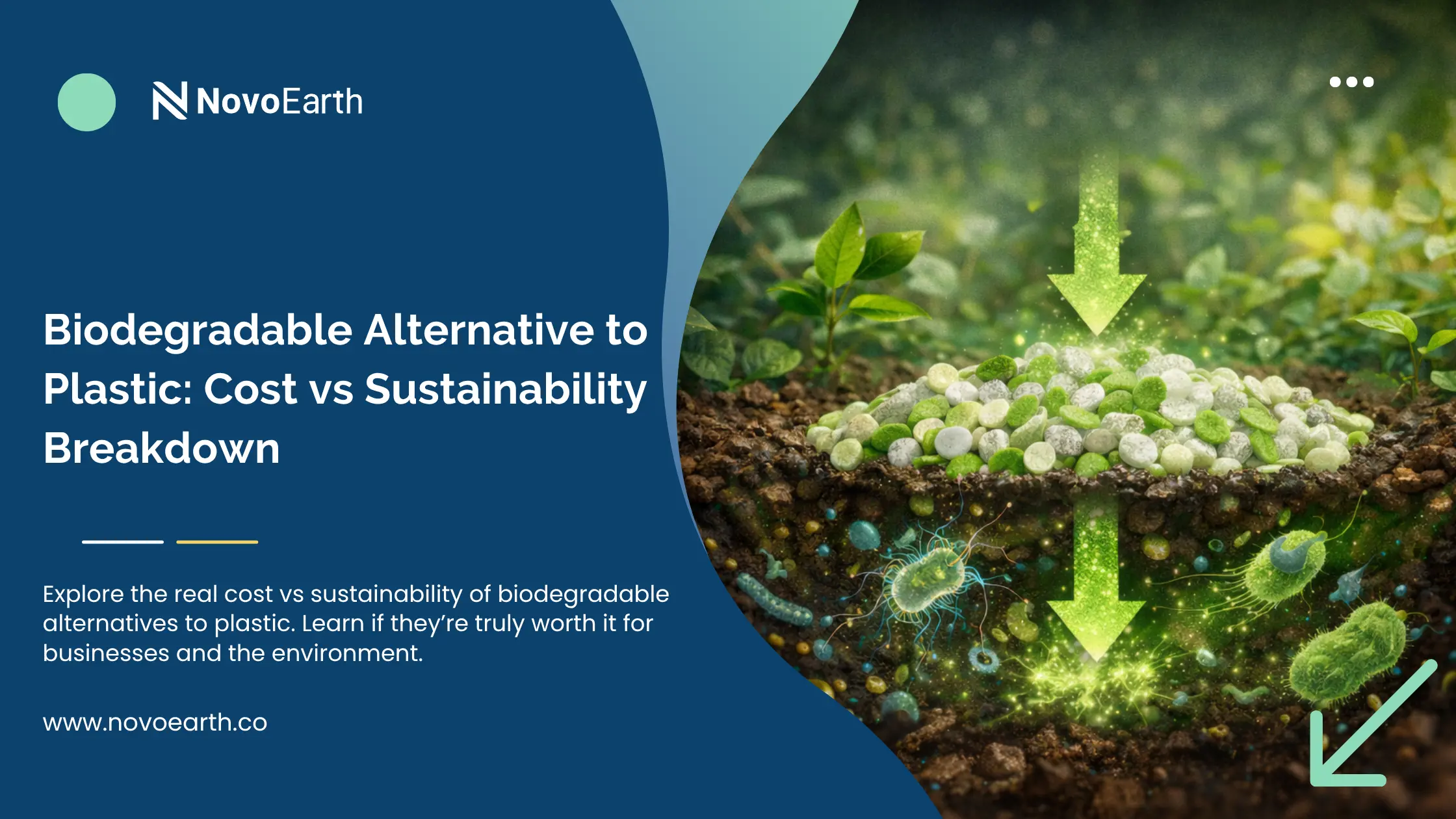
If you’re a manufacturer, startup founder, sustainability leader, or policymaker, you’ve likely come across the growing conversation around biodegradable alternatives to plastic. But beyond the buzz, one critical question stands out:
👉 Are they truly worth the cost?
Plastic has long been the backbone of modern manufacturing—not without reason.
However, these advantages come with significant long-term trade-offs.
So the real decision isn’t just about cost—it’s about value over time.
This is where biodegradable alternatives enter the conversation—not as a one-size-fits-all solution, but as a strategic consideration.
This blog breaks down the real cost vs. sustainability equation of biodegradable materials—so you can move beyond assumptions and make a decision grounded in clarity, data, and long-term business impact.
Biodegradable alternatives to plastic are materials designed to break down naturally through microorganisms, leaving minimal or no toxic residue.
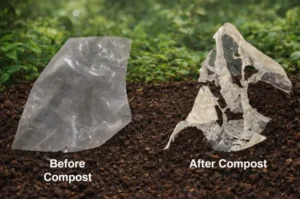
👉 Unlike conventional plastics (which take 400–1000 years to degrade), these materials can decompose in months to a few years under the right conditions.
Material Type | Cost per kg (Approx) | Notes |
Traditional Plastic | ₹80 – ₹120 | Petroleum-based, highly optimised |
Biodegradable Alternatives to Plastic | ₹180 – ₹450 | Emerging tech, lower economies of scale |
📌 Reality Check:
Biodegradable alternatives to plastic are currently 1.5x to 3x more expensive upfront.
However:
✔ Costs are dropping annually by ~8–12% due to innovation and scale
Factor | Traditional Plastic | Biodegradable Alternatives to Plastic |
Landfill Cost | High | Lower |
Recycling Complexity | Very High | Moderate |
Environmental Cleanup | Extremely High | Minimal |
👉 Governments globally spend billions annually on plastic waste cleanup.
📌 This cost is often hidden, but it’s real.
Metric | Traditional Plastic | Biodegradable Alternatives to Plastic |
Decomposition Time | 400+ years | Months–years |
Microplastic Generation | High | Minimal to none |
Carbon Footprint | High | 30–70% lower |
Toxic Residue | Yes | Negligible |
📌 Key Insight:
The real advantage of biodegradable alternatives to plastic is not just decomposition—it’s eliminating microplastics, which are now found in air, water, and even human blood.
Let’s be brutally honest—plastic looks cheap only because:
👉 When you include these, plastic is NOT cheap anymore.
Not every use case justifies the cost. Here’s where they do:
📌 Truth: If your only goal is cost-cutting, biodegradable alternatives to plastic may not fit—yet.
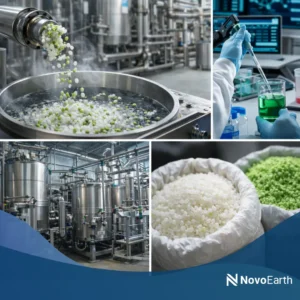
NovoEarth is not just talking sustainability—it’s building scalable biodegradable polymer solutions designed for real-world use.
👉 The goal is simple:
Make biodegradable alternatives to plastic cost-competitive AND scalable.
Let’s break it down clearly:
❌ Plastic wins (cheaper upfront)
✅ Biodegradable alternatives to plastic win
Because:
📌 Brutal Truth:
If you ignore sustainability today, you’ll pay more later—financially or legally.
Not always. They require proper conditions to degrade, but they are significantly better than traditional plastics.
Because of limited scale, newer technology, and specialised processing.
Not yet. But they are rapidly expanding across industries.
High-quality biodegradable polymers are designed to avoid microplastic formation.
NovoEarth is building the future of biodegradable alternatives to plastic—scalable, practical, and designed for real impact.
👉 Partner with NovoEarth to integrate sustainable polymers into your business and stay ahead of regulations, costs, and environmental risks.
Sarthak Gupta
Mechanical Engineer & Founder, NovoEarth
Sarthak Gupta is a Mechanical Engineer and the founder of NovoEarth, a cleantech venture specialising in circular material innovation and sustainable polymer solutions. His expertise lies in biodegradable polymer technologies and recycling systems for multilayer plastics—complex waste streams traditionally considered non-recyclable. With prior research and development experience in renewable energy and wind turbine design, Sarthak focuses on translating engineering innovation into scalable, commercially viable climate solutions.