
Close

If you’re a sustainability-conscious consumer, policymaker, or business exploring biodegradable alternatives to plastic, you’re probably asking one key question—are they genuinely better or just a marketing trick?
The reality is confusing. Terms like eco-friendly, compostable, and biodegradable are often used loosely, making it hard to separate facts from greenwashing. Meanwhile, plastic pollution continues to rise, with over 400 million tonnes of plastic produced globally each year, and less than 10% effectively recycled.
This blog breaks down the truth behind biodegradable alternatives to plastic, backed by data, so you can make informed and practical decisions—not just hopeful ones.
Biodegradable alternatives to plastic are materials designed to break down naturally through microbial action into water, carbon dioxide, and biomass within a specific timeframe.
However, not all biodegradable alternatives to plastic behave the same way in real-world conditions.
The appeal of biodegradable alternatives to plastic comes from three major promises:
Studies show that conventional plastics fragment into microplastics, now found in:
Biodegradable alternatives to plastic aim to eliminate this fragmentation cycle.
Here’s where things get uncomfortable.
Not all biodegradable alternatives to plastic deliver on their promise.
A 2023 lifecycle study found:
|
Metric |
Traditional Plastic |
Biodegradable Alternatives to Plastic |
|
Decomposition Time |
400+ years |
Months–years |
|
Microplastic Generation |
High |
Minimal (if properly degraded) |
|
Carbon Footprint |
High |
30–70% lower |
|
Degradation Conditions |
None required |
Often specific conditions needed |
|
Environmental Risk |
Persistent pollution |
Conditional benefit |
Here’s the blunt truth:
Material innovation alone won’t solve plastic pollution. Systems will.
Even the best biodegradable alternatives to plastic fail if:
👉 In India, less than 20% of waste is properly processed, which severely limits the effectiveness of biodegradable materials.
Most companies stop at “biodegradable.” That’s not enough.
NovoEarth goes deeper.
👉 Instead of contributing to greenwashing, NovoEarth is building measurable, science-backed solutions.
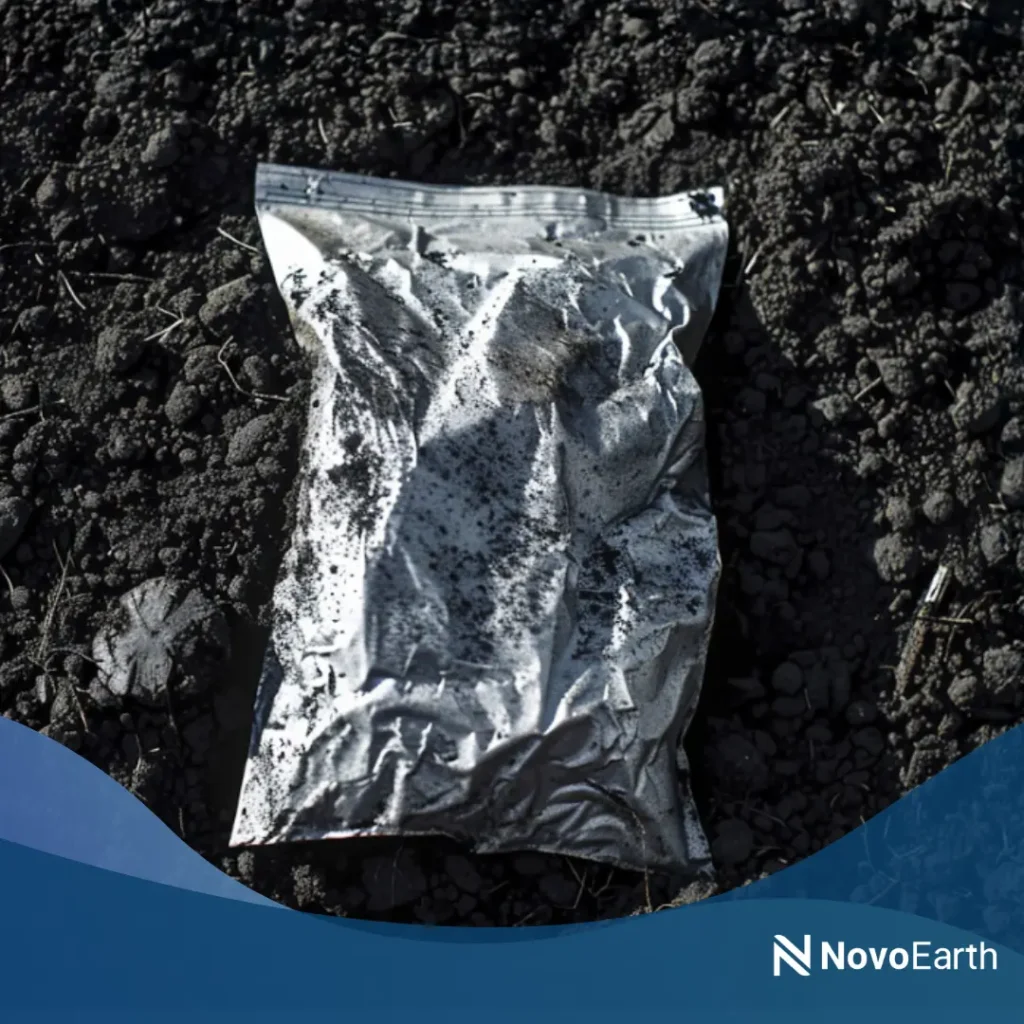
Yes, but only when they degrade properly under suitable conditions. Otherwise, the benefit is limited.
High-quality biodegradable polymers can significantly reduce microplastic formation, but not all products achieve this.
Some can, but many require controlled environments like industrial composting facilities.
Because regulations are weak and terms like “eco-friendly” are often misused without scientific backing.
Look for:
If you’re serious about reducing plastic pollution—not just talking about it—it’s time to rethink materials and systems together.
👉 NovoEarth is building the next generation of biodegradable polymer solutions designed for real impact.
Explore how we are tackling microplastics and redefining sustainability:
🌱 Visit NovoEarth.co
Sarthak Gupta
Mechanical Engineer & Founder, NovoEarth
Sarthak Gupta is a Mechanical Engineer and the founder of NovoEarth, a cleantech venture specialising in circular material innovation and sustainable polymer solutions. His expertise lies in biodegradable polymer technologies and recycling systems for multilayer plastics—complex waste streams traditionally considered non-recyclable. With prior research and development experience in renewable energy and wind turbine design, Sarthak focuses on translating engineering innovation into scalable, commercially viable climate solutions.