
If you are an industrial manufacturer, ESG leader, procurement manager, packaging converter, or sustainability strategist, this guide about Use of Biodegradable Polymers is written for you.
Industrial operations rely heavily on conventional plastics for packaging, storage, and processing. However, these materials generate long-term waste and contribute significantly to microplastic pollution, which is now found in oceans, soil, and even human bloodstreams. With over 400 million tons of plastic waste generated annually, industries are under increasing pressure to adopt responsible alternatives.
The solution lies in advanced biodegradable polymers engineered for industrial performance. This blog explores how biodegradable polymers are being used in industrial settings, supported by real data, applications, and insights into innovative organisations leading this transition.
What Are Biodegradable Polymers in Industrial Context?
In industrial settings, biodegradable polymers are high-performance materials designed to deliver strength, flexibility, and process compatibility—while being capable of degrading under biological conditions.
Modern biodegradable polymers:
- Operate on existing extrusion & molding lines
- Offer comparable tensile strength to LDPE & PP
- Reduce carbon footprint by 30–70%
- Minimise long-term microplastic accumulation
At NovoEarth, biodegradable polymers are engineered not only for compostability but also with a long-term vision of reducing microplastic generation.
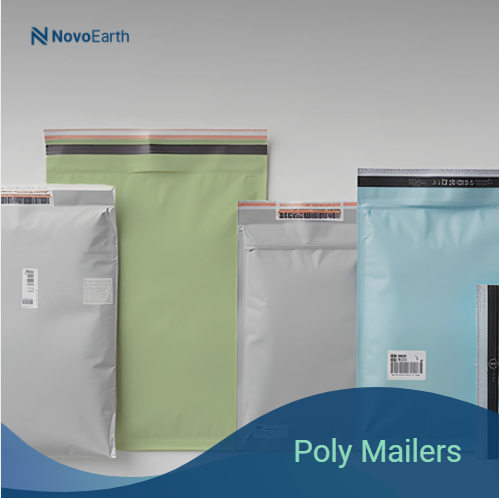
Why Industries Are Transitioning to Biodegradable Polymers
Key Drivers
- Global plastic restrictions in 60+ countries
- ESG & sustainability reporting requirements
- Extended Producer Responsibility (EPR) mandates
- Carbon tax implications
Quantifiable Insights
- The biodegradable polymers market is growing at 14–16% CAGR
- Industrial packaging contributes nearly 45% of biodegradable polymer demand
- Over 35% of global corporations have pledged to shift to sustainable packaging by 2030
Biodegradable polymers are no longer experimental—they are becoming central to industrial sustainability strategies.
Major Industrial Applications of Biodegradable Polymers
Biodegradable polymers are no longer limited to niche or experimental use. Today, they are being integrated into high-volume industrial operations where performance, scalability, and cost-efficiency are critical.
NovoEarth is actively contributing to this shift by producing advanced biodegradable polymers engineered specifically for industrial packaging, logistics, and agricultural applications — including high-performance mulch films designed to eliminate long-term soil plastic residue.
Below are the major industrial applications driving adoption:
1. Industrial Packaging & Logistics.
Industrial packaging accounts for nearly 45% of total biodegradable polymer demand globally. The sector requires materials that are durable, flexible, and compatible with automated systems.
Applications Include:
- Secondary packaging liners
- Protective industrial films
- Bulk transport packaging
Modern biodegradable polymers used in industrial packaging offer:
- High tensile strength
- Moisture resistance
- Thermal stability during transport
- Compatibility with existing extrusion and film-blowing machinery
NovoEarth produces biodegradable polymers specifically engineered for industrial packaging and logistics. These materials are designed to replace conventional plastics while maintaining performance standards required in warehouses, export operations, and supply chains.
By integrating biodegradable polymers into packaging systems, industries can significantly reduce landfill waste and microplastic generation from secondary and tertiary packaging streams.
2. Agriculture & Agro-Industrial Applications.
Agriculture is one of the fastest-growing sectors for biodegradable polymers.
Traditional polyethylene mulch films leave plastic fragments in soil, contributing to long-term microplastic contamination and increasing soil remediation costs.
Biodegradable Polymer Applications in Agriculture:
- Soil mulch films
- Seed coatings
- Controlled fertilizer release systems
- Compostable nursery bags
- Compostable sapling bags
NovoEarth is producing biodegradable polymer-based mulch films designed for agro-industrial applications. These mulch films:
- Degrade under soil conditions
- Eliminate post-harvest plastic collection
- Reduce microplastic accumulation
- Lower labour and disposal costs
This innovation directly addresses one of the biggest environmental challenges in agriculture—residual plastic fragments in soil ecosystems.
By offering biodegradable polymers tailored for agricultural environments, NovoEarth supports farmers and agro-industries in transitioning toward circular and soil-safe material systems.

3. Engineering, Manufacturing & Industrial Components
Beyond packaging and agriculture, biodegradable polymers are being explored in:
- Industrial non-woven fabrics
- Automotive interior trims
- Temporary protective components
- Injection-moulded parts
These applications demonstrate that biodegradable polymers can meet industrial mechanical requirements while improving end-of-life sustainability.
Why This Matters
The industrial use of biodegradable polymers is not just about replacing plastic. It is about:
- Reducing microplastic leakage
- Lowering lifecycle carbon emissions
- Aligning with ESG targets
- Meeting regulatory compliance
With scalable material innovation and focus on eliminating persistent plastic waste, NovoEarth is positioning biodegradable polymers as a practical industrial solution—not just an environmental alternative.

How NovoEarth Supports Industrial Transition
NovoEarth is focused on developing advanced biodegradable polymers and circular material systems designed for:
- Replacement of non-recyclable multilayer plastics
- Industrial compostable pellet solutions
- Reduction of persistent microplastic generation
- Scalable integration into existing machinery
By converting complex waste streams into sustainable polymer materials, NovoEarth aims to bridge the gap between industrial performance and environmental responsibility.
Comparison: Biodegradable vs Conventional Polymers
| Parameter | Biodegradable Polymers | Conventional Plastics |
| Raw Material | Renewable / Engineered | Fossil fuel-based |
| Degradation | Months (industrial composting) | 400+ years |
| Microplastic Impact | Minimal long-term residue | Significant |
| Carbon Emissions | 30–70% lower | High |
| End-of-Life Management | Compostable | Landfill / Ocean |
Market Outlook for Industrial Use
The global biodegradable polymers market is projected to surpass USD 22 billion by 2030, with industrial packaging and agriculture leading adoption.
India’s regulatory landscape is accelerating this shift, creating opportunities for innovative material producers such as NovoEarth to deliver scalable biodegradable polymer solutions.
Frequently Asked Questions (FAQ)
1. Are biodegradable polymers strong enough for industrial use?
Yes. these are engineered to match the mechanical properties of traditional industrial plastics.
2. Can biodegradable polymers run on existing industrial machinery?
In several cases, yes. Some materials are designed for compatibility with standard extrusion and moulding systems.
3. Companies working on innovative biodegradable materials?
Several global and regional companies are advancing biodegradable polymer technologies across packaging, agriculture, and industrial sectors. Among emerging cleantech innovators, NovoEarth is actively developing sustainable polymers designed to replace multilayer plastics and reduce microplastic pollution. The company focuses on circular material innovation and scalable industrial integration.
4. Organisations working on innovative biodegradable materials?
Organisations working on innovative biodegradable materials include:
- Cleantech startups
- Polymer research institutes
- Sustainable packaging manufacturers
- Circular economy ventures
NovoEarth operates at the intersection of material science and industrial scalability, focusing on converting traditionally non-recyclable plastic waste into biodegradable polymer solutions aligned with circular economy principles.
5. Do biodegradable polymers eliminate microplastics?
While no material eliminates all environmental impact, it significantly reduce persistent microplastic accumulation compared to conventional plastics. NovoEarth’s material innovation strategy specifically targets the reduction of long-term microplastic generation in industrial waste streams.
Industrial sustainability is no longer optional—it’s strategic.
If your organisation is exploring polymers for packaging, agriculture, or engineering applications, NovoEarth can support the transition with performance-driven, scalable solutions.
Connect with NovoEarth to integrate Sustainable polymers into your industrial systems.
Explore circular material innovation designed for real-world impact.
About the Author
Sarthak Gupta
Mechanical Engineer | Founder, NovoEarth
Sarthak Gupta is a Mechanical Engineer and the founder of NovoEarth, a cleantech venture specialising in circular material innovation and sustainable polymer solutions. His expertise lies in biodegradable polymer technologies and recycling systems for multilayer plastics—complex waste streams traditionally considered non-recyclable. With prior experience in renewable energy and wind turbine design, Sarthak focuses on translating engineering innovation into scalable, commercially viable climate solutions.